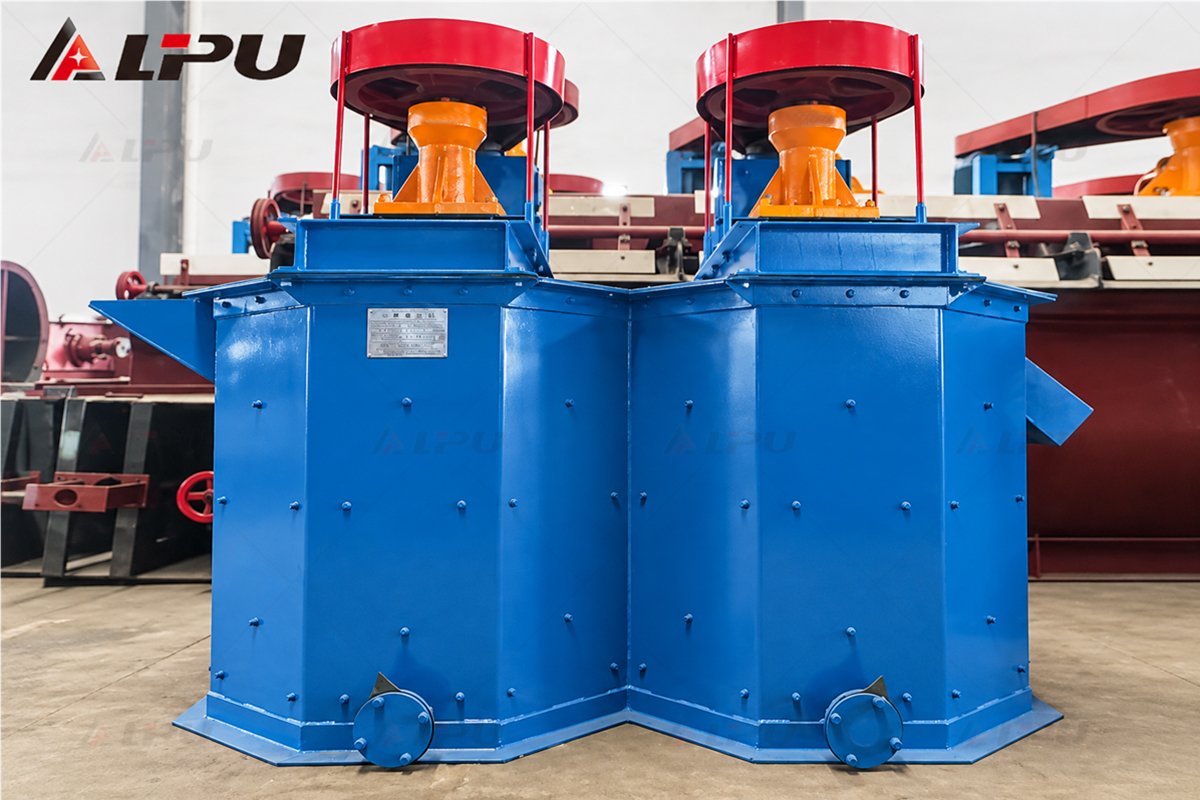
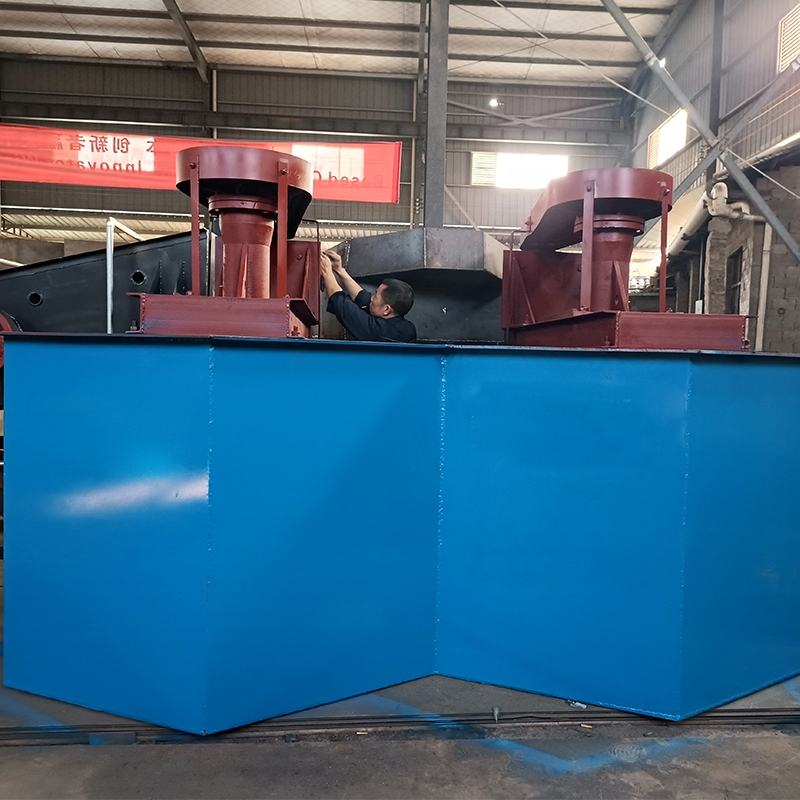
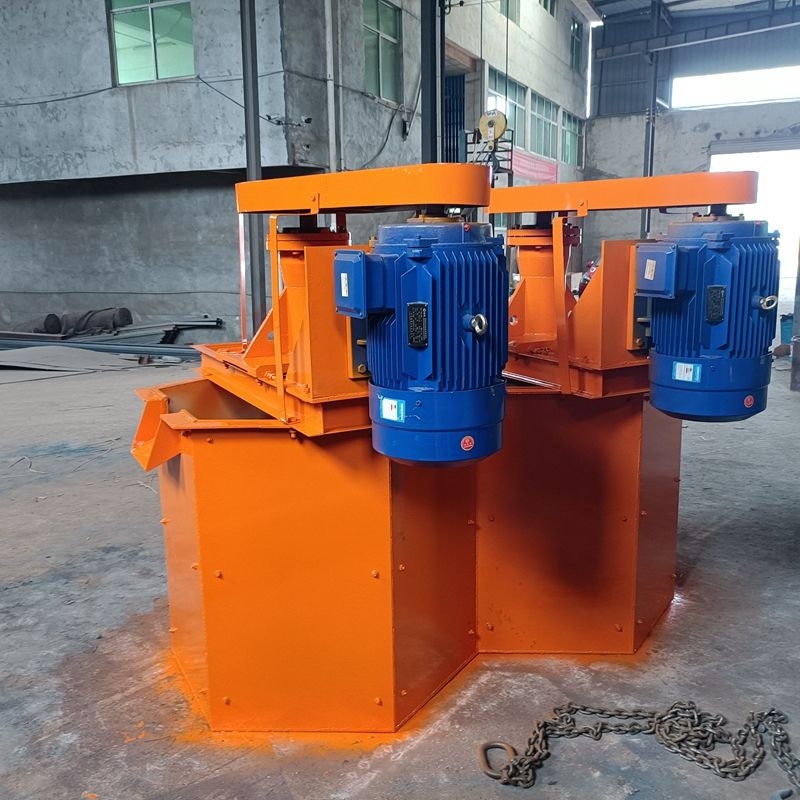
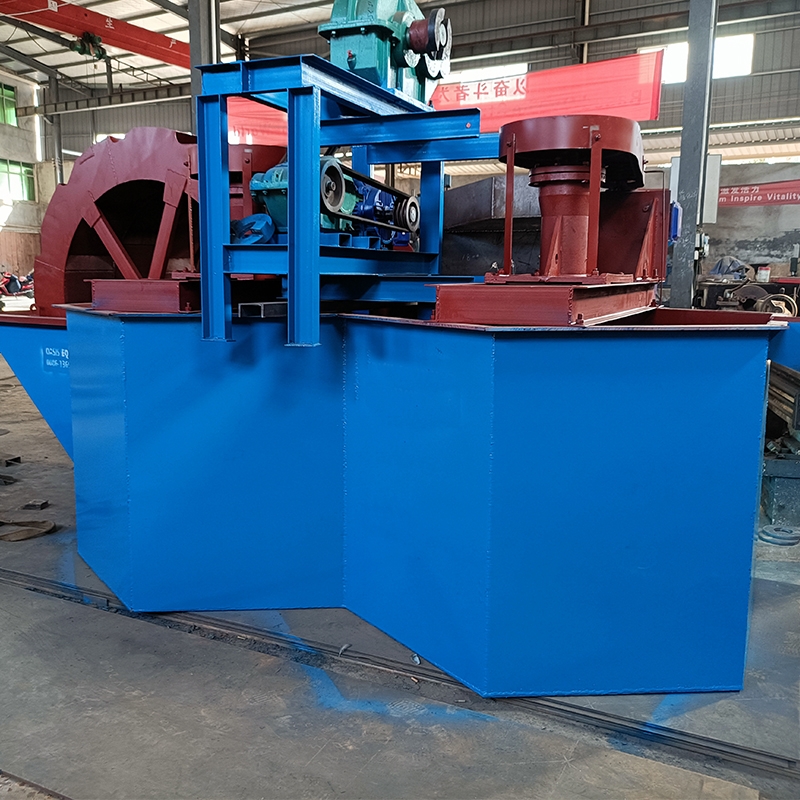
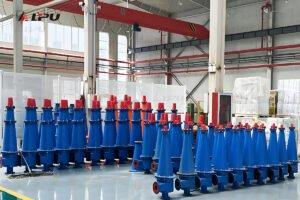
The LIPU Attrition Scrubbing Machine uses intensive agitation and particle-to-particle contact to loosen clay, slime, and other surface impurities from suitable minerals. It is used in silica sand, quartz sand, feldspar, and other mineral washing circuits.
Scrubbing Volume: 1–12 m³, depending on model
Maximum Feed Size: ≤5 mm
Feeding Density: 50–60%, as listed in the model table
Motor Power: 11–90 kW per motor, depending on model
An attrition scrubbing machine, also called an attrition scrubber or agitator washer, cleans mineral particles through intensive agitation. The friction between particles helps loosen clay, slime, and other coatings that may affect downstream processing or product quality.
The machine is commonly used in quartz sand and feldspar beneficiation. Depending on the process flow, it can be installed before or after washing and classification equipment.
What Materials Can an Attrition Scrubber Process?
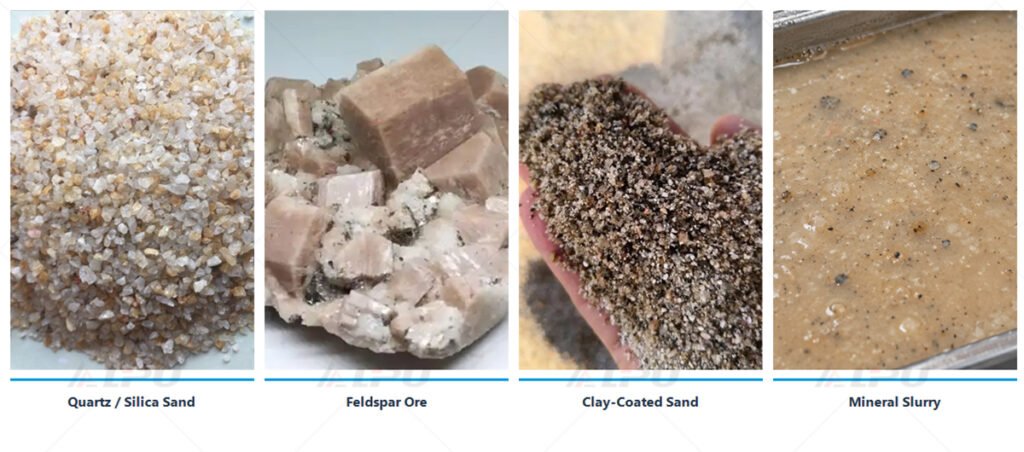
Typical applications include silica sand, quartz sand, feldspar, natural sand, glass sand, beach sand, and construction sand. The machine may also be considered for other mineral slurries with impurities that can be loosened by attrition.
Materials processed by an attrition scrubber
Material suitability depends on particle size, impurity type, slurry density, and the required product quality. Testing representative material can help determine the required scrubbing conditions.
How Does an Attrition Scrubbing Machine Work?
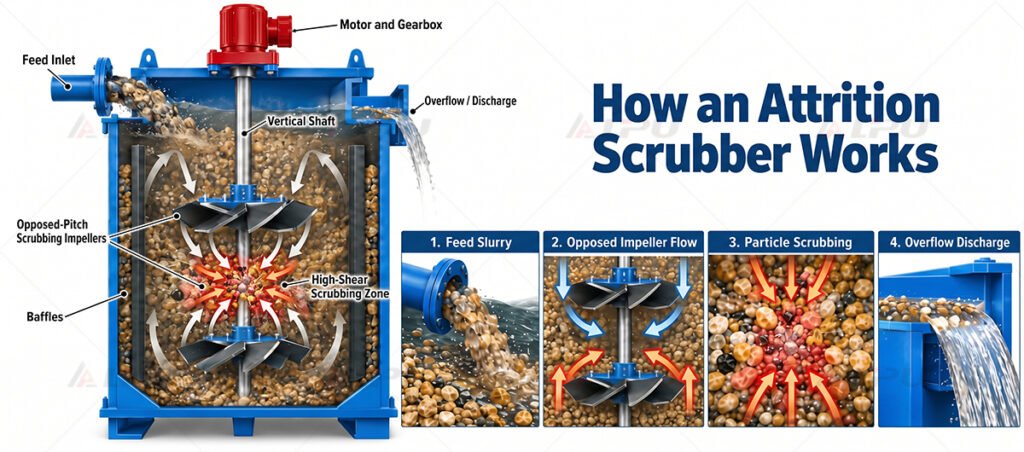
Ore or sand enters the scrubbing chamber and mixes with water to form a slurry. The motor drives the shaft and impeller, creating strong agitation and particle-to-particle contact that loosens surface impurities.
Operating principle and internal scrubbing mechanism of an attrition scrubbing machine
The scrubbed slurry then moves through the machine and exits through the discharge system. The loosened fines may require further washing or classification. For example, a hydrocyclone or spiral classifier may be used where suitable to separate fine particles from coarser material.
How an Attrition Scrubber Fits into a Washing Circuit
An attrition scrubber is usually selected as part of a complete processing circuit. A typical arrangement may include feed preparation, scrubbing, washing, classification, and downstream separation.
For sand applications, a sand washing machine may follow scrubbing to wash the material. The process sequence depends on the feed material, impurity characteristics, and final product requirements.
Main Components of an Attrition Scrubbing Machine
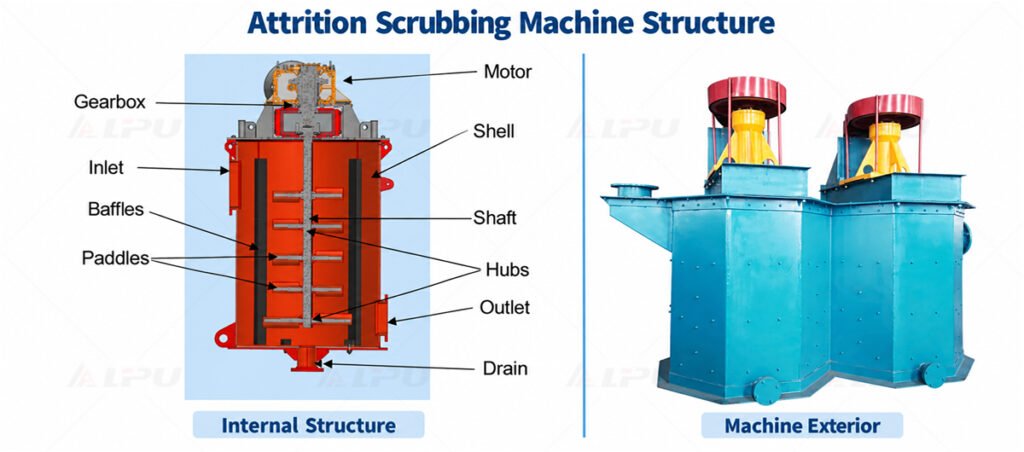
Internal components and exterior view of a LIPU attrition scrubbing machine
Component
Function
Scrubbing tank or cylinder
Holds the slurry during scrubbing
Drive unit
Supplies rotational power to the shaft and impeller
Shaft and impeller
Agitate the slurry and promote particle-to-particle scrubbing
Feed system
Delivers material into the machine
Discharge system
Transfers scrubbed slurry to the next process stage
Wear-resistant lining
Protects selected internal surfaces from abrasion
Control system
Supports operation of the supplied configuration
Component arrangements and materials may vary by model. Confirm the final configuration in the equipment proposal.
Benefits of Attrition Scrubbing for Mineral Processing
Helps loosen clay, slime, and other surface coatings from suitable mineral particles.
Prepares material for downstream washing, classification, or separation.
Can be configured for different processing volumes and motor power requirements.
Wear-resistant lining and impeller materials can be specified for abrasive applications.
Can be integrated with water recirculation where the plant circuit supports reuse.
Actual cleaning results depend on the feed material and operating conditions. Confirm wear materials and water system arrangements for the selected model.
Confirm model dimensions, weights, and operating parameters against the approved technical drawing and quotation.
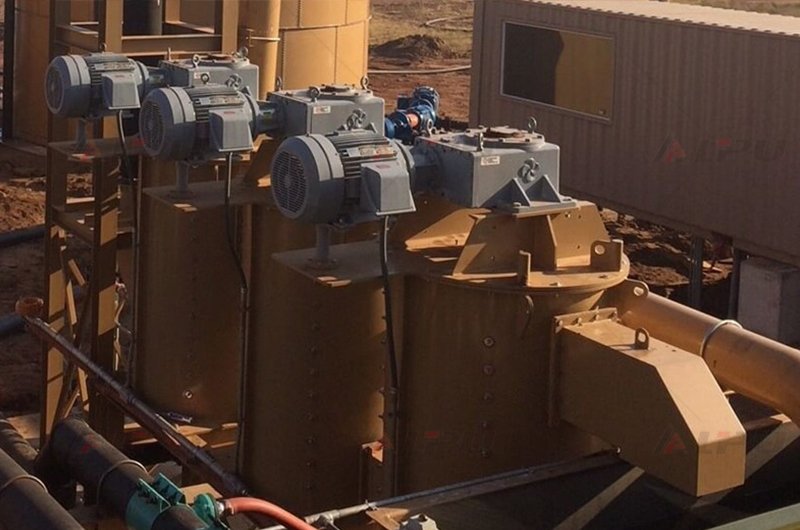
Attrition Scrubber Installation and Site Photos
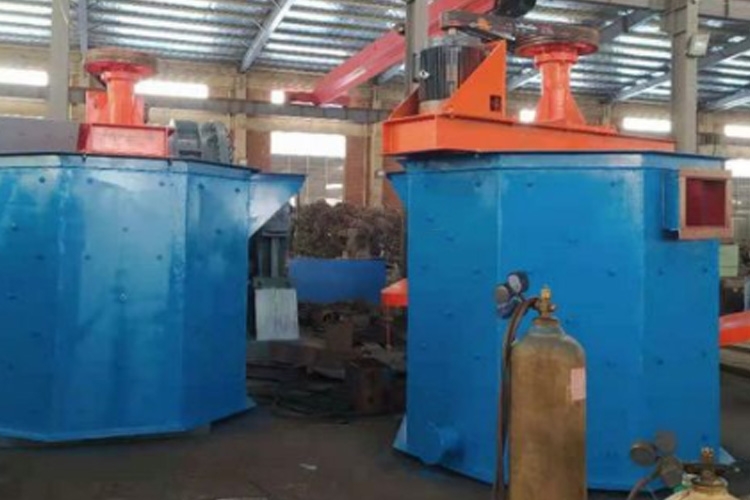
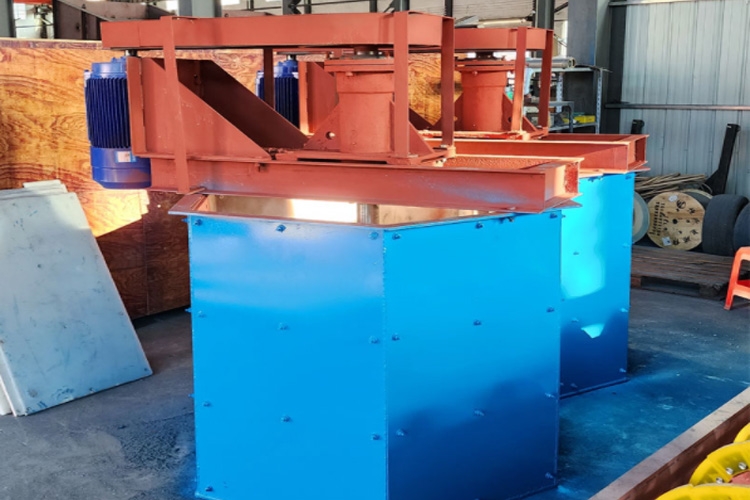
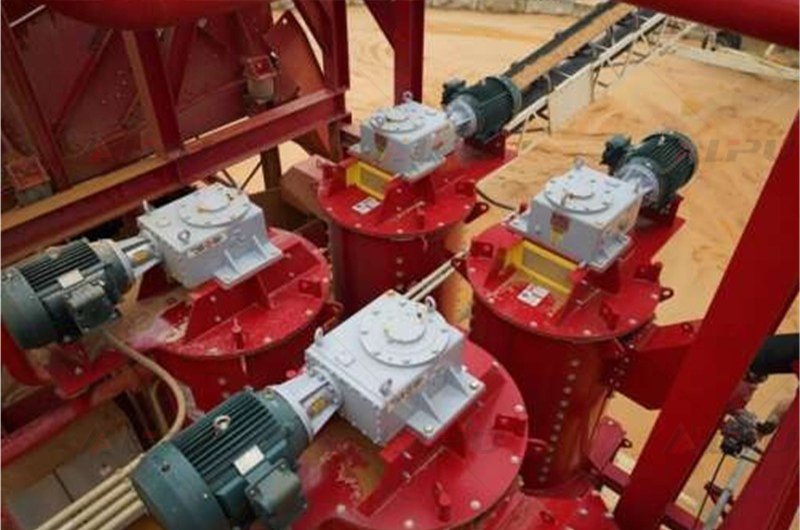
Outdoor attrition scrubber installation at a mineral processing site
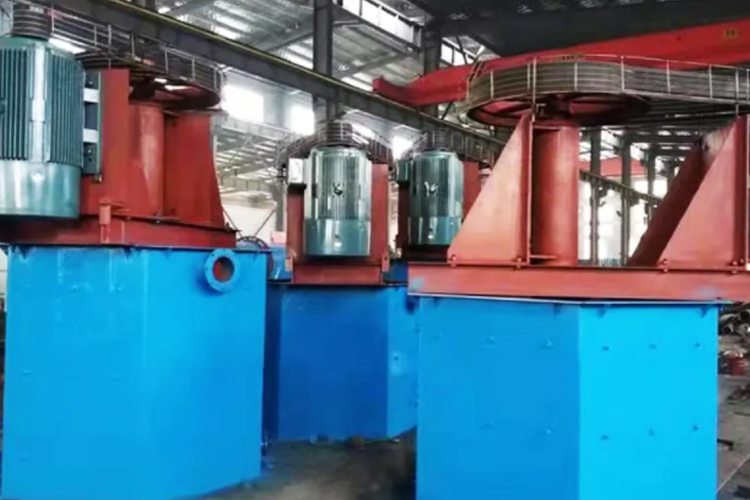
Multiple attrition scrubber cells arranged in a processing plant
Use verified site photos to show the machine installation, feed and discharge connections, and its place in the processing circuit. Add project location, material, or performance details only when confirmed by project records.
Installation and After-Sales Support
LIPU can provide support according to the scope confirmed in the equipment proposal, including installation and commissioning guidance, operator training, maintenance recommendations, technical assistance, and replacement parts.
Confirm the included services and warranty terms in the equipment proposal or sales agreement.
Attrition Scrubbing Machine FAQs
What is an attrition scrubbing machine used for?
It is used to scrub suitable mineral particles and loosen slime, clay, and other impurities from their surfaces. Common applications include silica sand, quartz sand, and feldspar processing.
What is the maximum feed size listed for these models?
The existing model table lists a maximum feeding size of 5 mm or less. Confirm the feed size requirements for the selected model and material.
What feeding density is listed in the model table?
The table lists a feeding density of 50–60%. The suitable operating density depends on the material and process conditions.
Can the machine remove all impurities by itself?
Scrubbing loosens and disperses surface impurities. Further washing, classification, or separation may be needed to remove the released fines and meet the final product specification.
How do I choose a suitable model?
Provide the material type, feed size, required capacity, feeding density, impurity characteristics, and target product quality. The machine should be selected as part of the complete processing circuit.
Can chemicals be added during scrubbing?
The original page notes that chemicals may be used in some cases. Whether they are suitable, and at what dosage, should be determined through process evaluation and testing.
What capacity range should I use for planning?
The existing page summary states 0–80 t/h, but the model table does not provide capacity by model. Confirm capacity for the selected model, material, and operating conditions before using this figure for equipment selection.