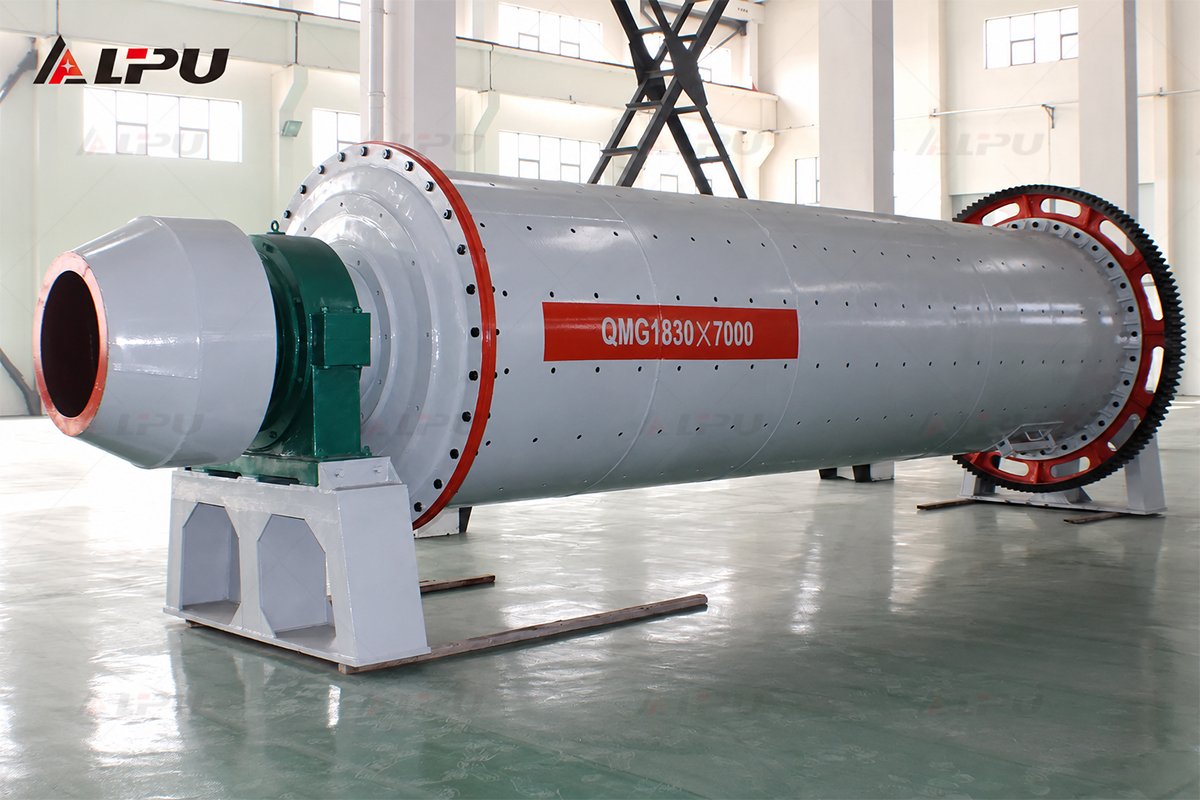
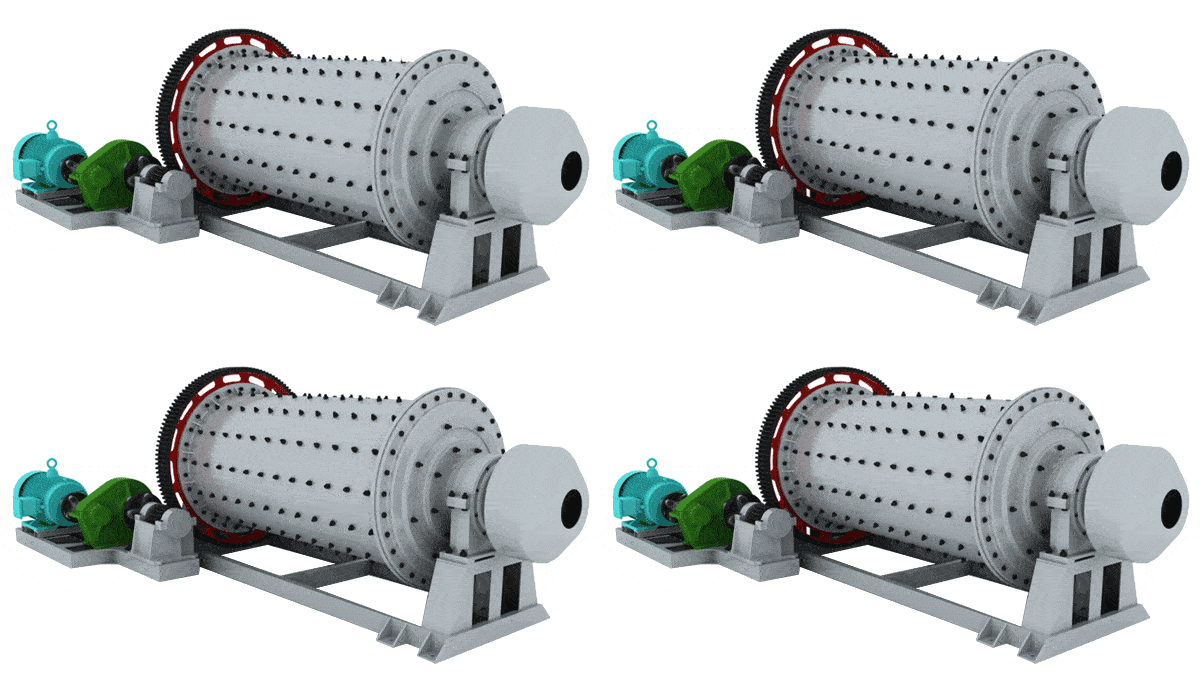
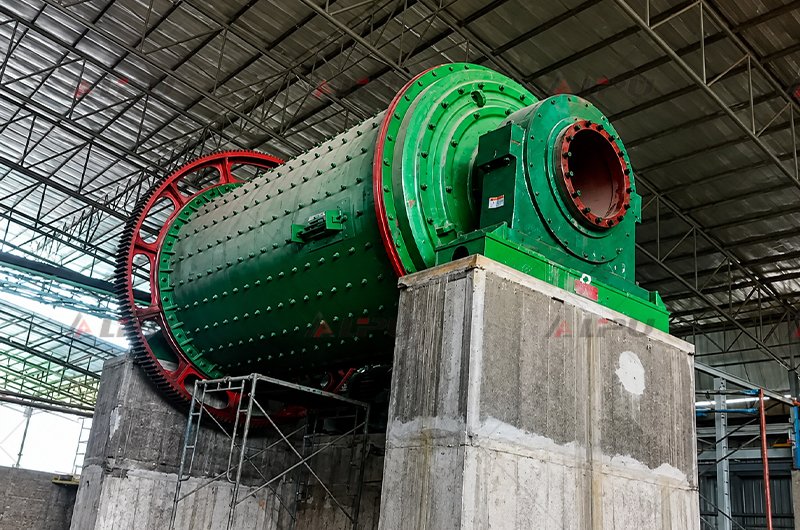
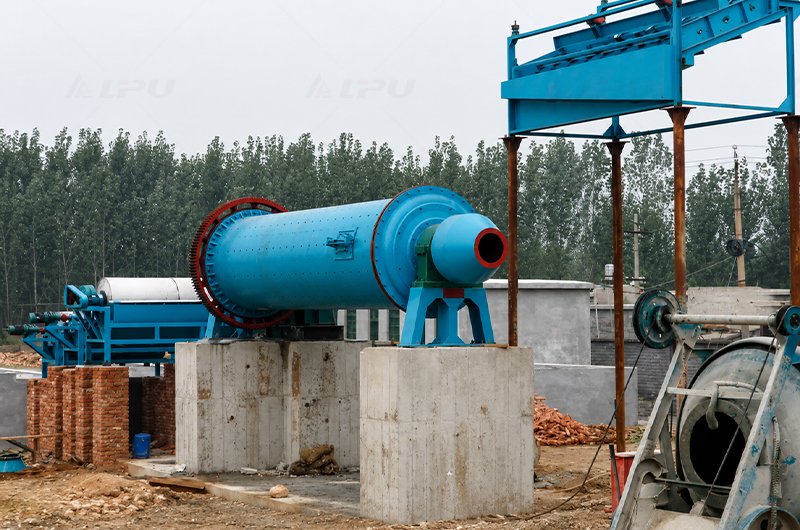
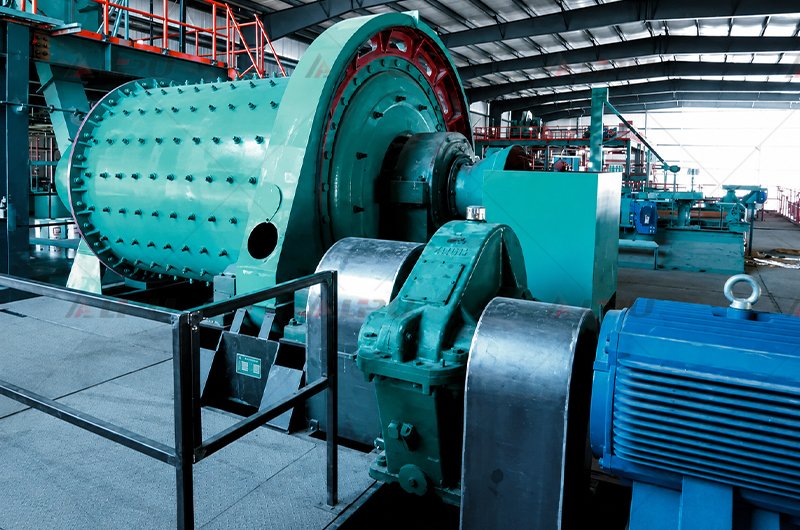
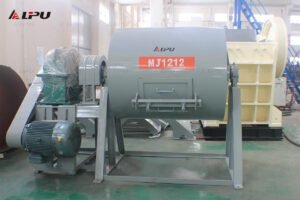
A ball mill is a cylindrical grinding machine that uses grinding media inside a rotating drum to reduce material size through impact and abrasion.
In a mineral processing plant, crushed ore enters the ball mill after the crushing stage. The material is then ground to a finer particle size before classification or beneficiation.
Ball mills can be configured for:
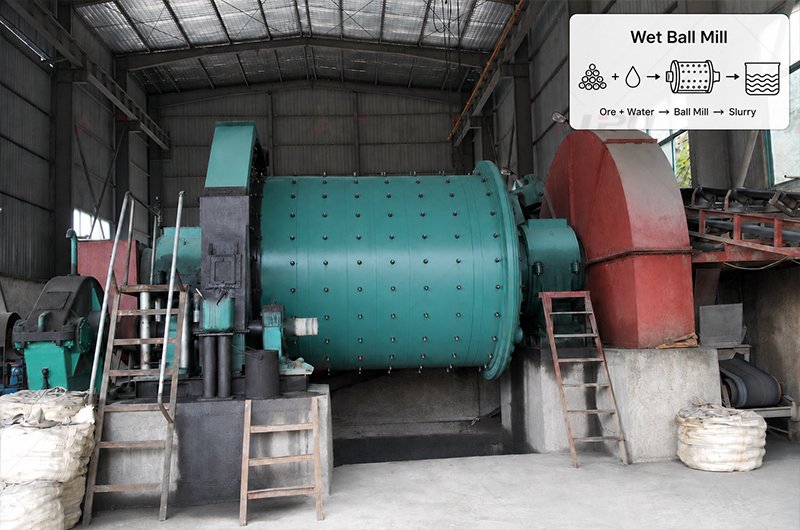
Wet grinding
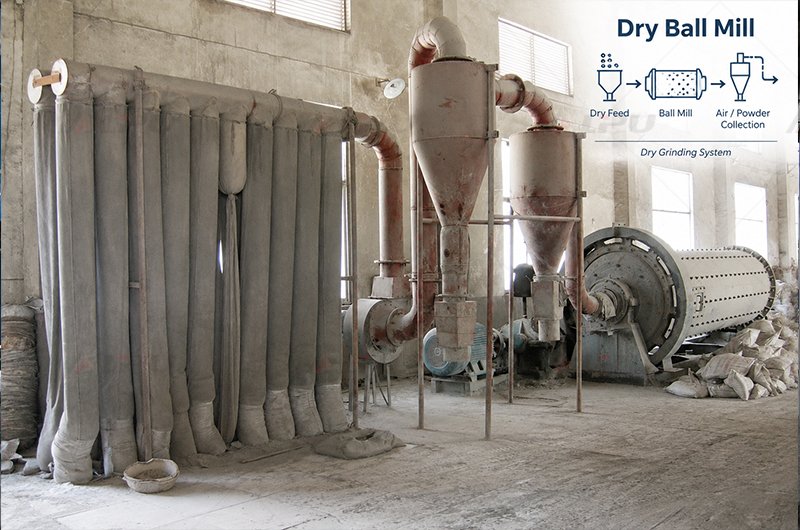
Dry grinding
Open-circuit grinding
Closed-circuit grinding
Overflow discharge
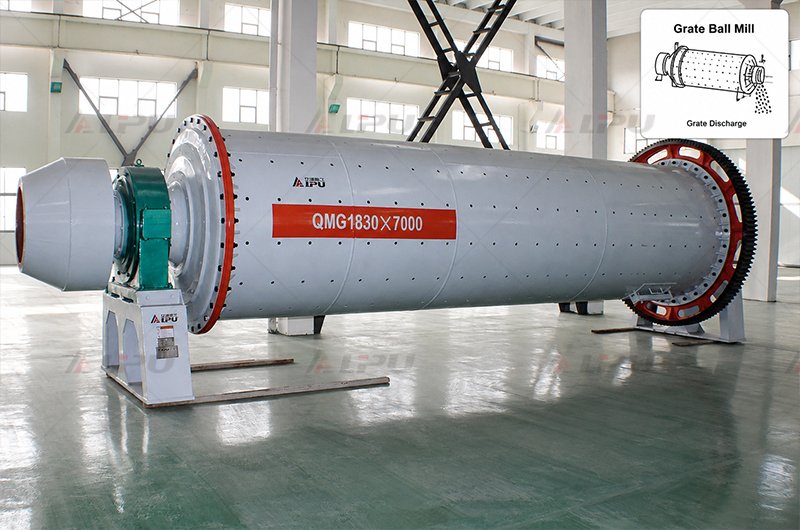
Grate discharge
The correct configuration depends on ore characteristics, required product size, processing capacity, and downstream treatment.
Unlike crushers, which mainly reduce larger rocks into smaller particles, ball mills are used for fine grinding and are an important part of many mineral processing circuits.
Different materials and process flows require different grinding configurations. The correct ball mill type should therefore be selected according to the actual project rather than nominal capacity alone.
Wet vs Dry Grinding
Wet grinding is widely used in mineral processing plants. Water is added during grinding to form slurry, which can then move to classification and beneficiation equipment.
Dry grinding is used when water is not required or when the finished material needs to remain dry. It can be suitable for certain industrial minerals, powder preparation processes, and other dry grinding applications.
Overflow vs Grate Discharge
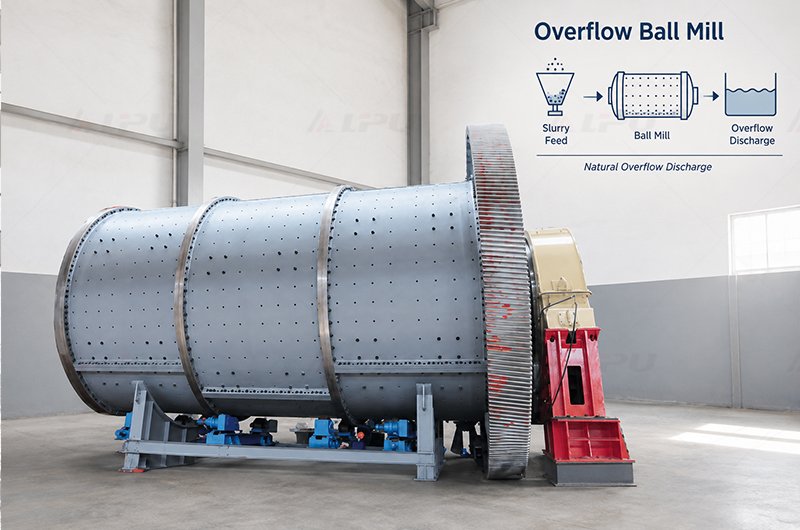
Overflow mills allow sufficiently fine material or slurry to leave through the discharge end as the material level rises.
Grate-discharge mills use a discharge grate and lifting arrangement to remove ground material more quickly.
The discharge type should be selected according to material characteristics, target grinding size, capacity, and the complete grinding circuit.
Grate Ball Mill
Overflow Ball Mill
Typical LIPU ball mill configuration options include:
Wet or dry grinding
Overflow or grate discharge
Different liner arrangements
Different grinding media configurations
Matching with spiral classifiers or hydrocyclones
Project-specific motor and transmission configurations
The feeding system, discharge arrangement, liners, grinding media, drive system, and auxiliary equipment can be configured according to project requirements.
Materials and Applications
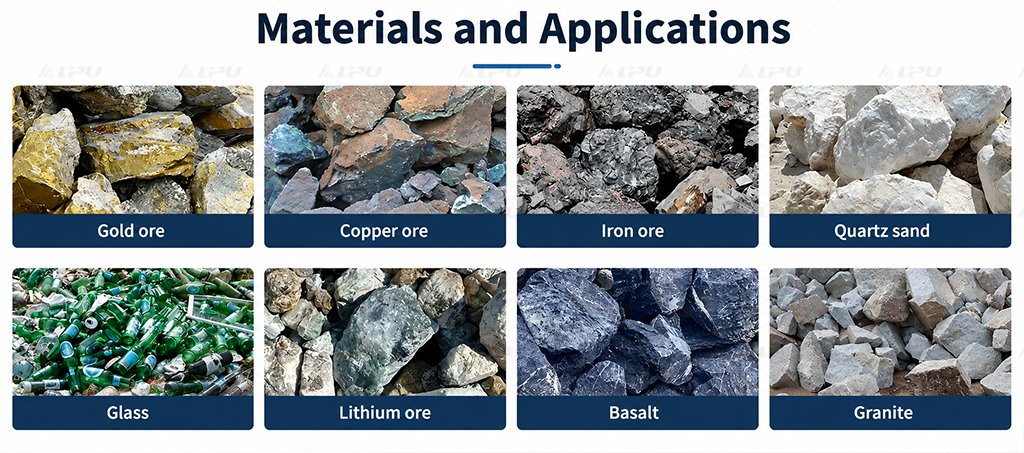
LIPU ball mills can be used for a wide range of metallic ores, non-metallic minerals, and other grindable materials.
Ball mill materials and applications
Typical materials include:
Gold ore
Copper ore
Lead-zinc ore
Iron ore
Manganese ore
Lithium ore
Quartz
Feldspar
Silica-containing minerals
Other metallic and non-metallic minerals
Typical applications include:
Gold processing plants
Copper beneficiation plants
Lead-zinc flotation plants
Iron ore processing plants
Lithium ore processing plants
Industrial mineral grinding plants
Mineral processing pilot projects
Complete beneficiation production lines
For projects that require a complete processing system, you can also review LIPU’s Mineral Processing Solutions for different ore types and beneficiation routes.
Material name alone is not enough to determine the correct ball mill.
Ores of the same mineral type may have different hardness, abrasiveness, moisture, particle size distribution, and grinding characteristics. Ball mill selection should therefore consider both the material condition and the required final grinding result.
How Does a Ball Mill Work?
Material enters the ball mill through the feeding end and moves into the rotating cylinder.
As the cylinder rotates, the grinding media are carried upward along the inner wall and then fall or roll back into the material bed.
Working Principle of a Ball Mill
Particle size reduction occurs mainly through:
Impact
Abrasion
Compression between the grinding media and material
As grinding continues, smaller particles gradually move toward the discharge end.
In an open grinding circuit, the ground material leaves the mill and continues directly to the next process.
In a closed grinding circuit, the discharged material enters classification equipment. Fine particles that meet the required size move downstream, while coarse particles are returned to the ball mill for further grinding.
Main Ball Mill Components
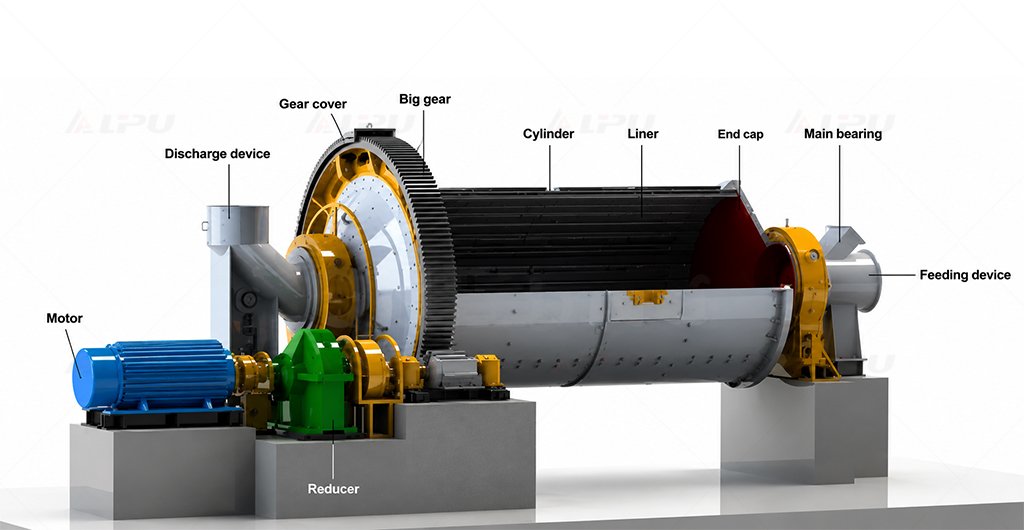
Ball Mill Main Components/Features
A typical industrial ball mill includes:
Feeding device
Hollow shaft
Mill cylinder
Liners
Grinding media
Discharge device
Large gear
Pinion
Motor
Transmission system
Bearing system
Lubrication system
The cylinder forms the main grinding chamber. Liners protect the inner shell and influence the movement of the grinding media.
The transmission system transfers power from the motor to the rotating cylinder, while the feeding and discharge systems control material movement through the mill.
The exact configuration varies according to the ball mill model and project requirements.
Ball Mill Grinding Circuit
A ball mill normally operates as part of a complete mineral processing system rather than as an isolated machine.
In a closed grinding circuit, classification equipment separates material according to particle size.
Qualified fine material moves to the next stage, while coarse particles return to the ball mill for additional grinding.
The grinding circuit should be designed according to:
Ore characteristics
Maximum feed size
Required capacity
Target grinding size
Downstream beneficiation method
Water availability
Classification method
Site conditions
For mineral processing projects, ball mill selection should therefore be considered together with the complete crushing, grinding, classification, and beneficiation flow.
LIPU can provide equipment matching for complete grinding and mineral processing circuits according to project requirements.
Ball Mill Technical Parameters
Ball mill capacity and grinding performance depend on material hardness, feed size, target particle size, grinding media, mill configuration, and the complete grinding circuit.
The following technical parameters can be used for preliminary model selection. Actual production capacity may vary according to material properties and operating conditions.
The parameter table should be used as a reference rather than the only basis for equipment selection.
Actual output may change when grinding different materials or when the required final particle size changes.
For a more accurate recommendation, material characteristics and process requirements should be evaluated together.
Ball Mill
Model
Shell rotation speed
(r/min)
Ball load
(t)
Feeding size
(mm)
Discharging size
(mm)
Capacity
(t/h)
Motor power
(kw)
Total weight
(t)
Ф900×1800
36-38
1.5
<20
0.075-0.89
0.65-2
18.5
5.85
Ф900×3000
36
2.7
<20
0.075-0.89
1.1-3.5
22
6.98
Ф1200×2400
36
3
<25
0.075-0.6
1.5-4.8
30
13.6
Ф1200×3000
36
3.5
<25
0.074-0.4
1.6-5
37
14.3
Ф1200×4500
32.4
5
<25
0.074-0.4
1.6-5.8
55
15.6
Ф1500×3000
29.7
7.5
<25
0.074-0.4
2-5
75
19.5
Ф1500×4500
27
11
<25
0.074-0.4
3-6
110
22
Ф1500×5700
28
12
<25
0.074-0.4
3.5-6
130
25.8
Ф1830×3000
25.4
11
<25
0.074-0.4
4-10
130
34.5
Ф1830×4500
25.4
15
<25
0.074-0.4
4.5-12
155
38
Ф1830×6400
24.1
21
<25
0.074-0.4
6.5-15
210
43
Ф1830×7000
24.1
23
<25
0.074-0.4
7.5-17
245
43.8
Ф2100×3000
23.7
15
<25
0.074-0.4
6.5-36
155
45
Ф2100×4500
23.7
24
<25
0.074-0.4
8-43
245
56
Ф2100×7000
23.7
26
<25
0.074-0.4
12-48
280
59.5
Ф2200×4500
21.5
27
<25
0.074-0.4
9-45
280
54.5
Ф2200×6500
21.7
35
<25
0.074-0.4
14-26
380
61
Ф2200×7000
21.7
35
<25
0.074-0.4
15-28
380
62.5
Ф2200×7500
21.7
35
<25
0.074-0.4
15-30
380
64.8
Ф2400×3000
21
23
<25
0.074-0.4
7-50
245
58
Ф2400×4500
21
30
<25
0.074-0.4
8.5-60
320
72
Ф2700×4000
20.7
40
<25
0.074-0.4
22-80
380
95
Ф2700×4500
20.7
48
<25
0.074-0.4
26-90
480
102
Ф3200×4500
18
65
<25
0.074-0.4
As per process conditions
630
149
Ф3600×4500
17
90
<25
0.074-0.4
As per process conditions
850
169
Ф3600×6000
17
110
<25
0.074-0.4
As per process conditions
1250
198
Ф3600×8500
18
131
<25
0.074-0.4
45.8-256
1800
260
Ф4000×5000
16.9
121
<25
0.074-0.4
45-208
1500
230
Ф4000×6000
16.9
146
<25
0.074-0.4
65-248
1600
242
Ф4000×6700
16.9
149
<25
0.074-0.4
75-252
1800
249
Ф4500×6400
15.6
172
<25
0.074-0.4
84-306
2000
280
Ф5030×6400
14.4
216
<25
0.074-0.4
98-386
2500
320
Ф5030×8300
14.4
266
<25
0.074-0.4
118-500
3300
403
Ф5500×8500
13.8
338
<25
0.074-0.4
148-615
4500
525
How to Select the Right Ball Mill
Selecting a ball mill only by the capacity shown in a specification table can result in an unsuitable grinding system.
For preliminary model selection, please provide:
Material or ore type
Maximum feed size
Required processing capacity
Target grinding size
Wet or dry grinding
Open or closed grinding circuit
Downstream processing method
Ore analysis or test data, if available
Local voltage and frequency
Project location
Material Characteristics
Hardness and abrasiveness affect grinding performance, wear, liner selection, and grinding media configuration.
Feed Size
The feed entering the ball mill should match the selected mill and upstream crushing system. Oversized feed can reduce grinding performance and increase mill load.
Target Grinding Size
A finer target particle size normally requires more grinding work and may reduce achievable throughput.
Required Capacity
Capacity should always be evaluated together with material characteristics and target grinding size. The capacity shown in the technical table should be treated as a reference range.
Wet or Dry Process
Wet and dry grinding require different process arrangements and auxiliary equipment. The downstream process should therefore be confirmed before final equipment selection.
Classification Method
For closed-circuit grinding, the ball mill must work together with suitable classification equipment such as a spiral classifier or hydrocyclone.
Why Choose LIPU?
LIPU Heavy Industry provides equipment for crushing, screening, grinding, classification, and mineral processing projects.
For ball mill applications, our support can extend beyond supplying an individual machine.
Copper ore ball mill in Philippines
Iron ore ball mill in Russia
Lead zinc ball mill in Canada
LIPU can assist with:
Ball mill model selection
Wet or dry grinding configuration
Grinding circuit arrangement
Crushing and grinding equipment matching
Classification equipment matching
Mineral processing equipment selection
Equipment manufacturing
Equipment inspection and testing
Installation and commissioning support
Spare parts and technical service
For a broader view of available grinding, classification, separation, and dewatering equipment, visit LIPU’s Beneficiation Equipment category.
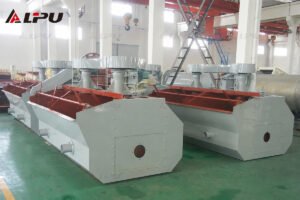
For complete mineral processing projects, the grinding section can also be considered together with flotation, magnetic separation, gravity separation, dewatering, feeding, conveying, and other related equipment.
The objective is to select equipment according to the complete process rather than treating each machine independently.
Frequently Asked Questions
Can a ball mill be used for both wet and dry grinding?
Yes. Ball mills can be configured for either wet or dry grinding. The correct configuration depends on the material, downstream process, water availability, and final product requirements.
What information is required to select a ball mill?
The main information includes material type, maximum feed size, required capacity, target grinding size, wet or dry process, and downstream processing method. Ore analysis or grinding test data can also help improve model selection.
Can a ball mill work with a spiral classifier?
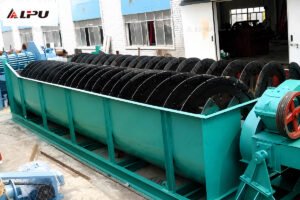
Yes. A ball mill and spiral classifier can form a closed grinding circuit. Fine material moves to the next processing stage, while coarse material can be returned to the mill for further grinding.
What determines the actual capacity of a ball mill?
Actual capacity depends on material hardness, feed size, target product size, grinding media, mill configuration, classification efficiency, and operating conditions. The capacity shown in the technical table should therefore be treated as a reference range.
Can LIPU provide a complete grinding and mineral processing line?
Yes. According to project requirements, LIPU can provide equipment matching for crushing, feeding, grinding, classification, flotation, magnetic separation, gravity separation, dewatering, conveying, and related mineral processing stages.
GET A PROJECT RECOMMENDATIONTell us your material, required capacity, feed size and target product size. Our team will recommend a suitable equipment configuration and provide a quotation.
Leave a Message
We will reply to you within 24 hours
Hello, I am Lipu Heavy Industry, what can we do for you please?