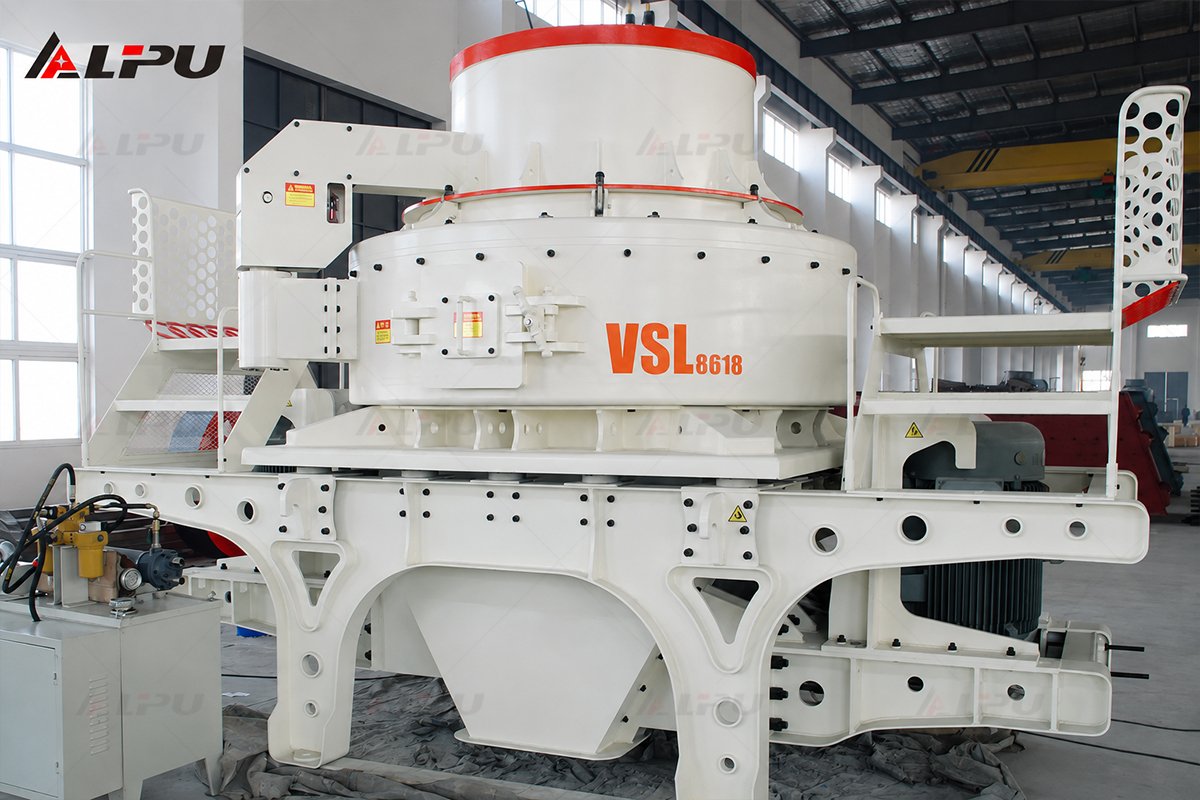
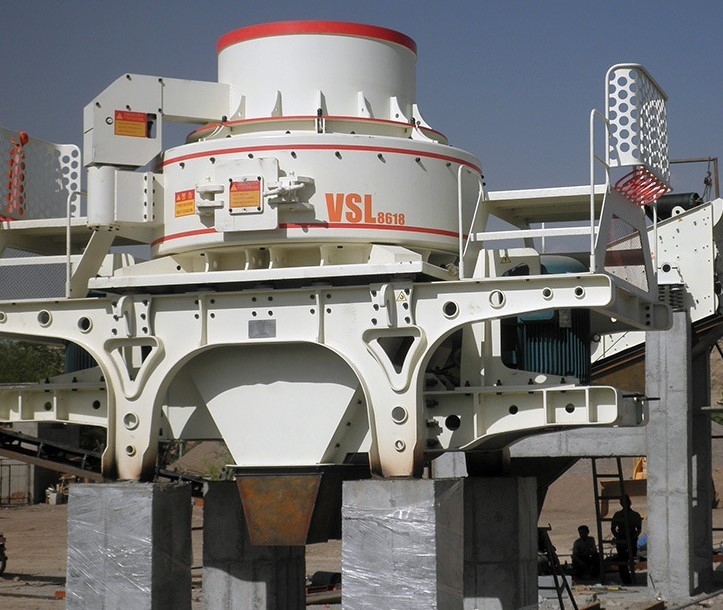
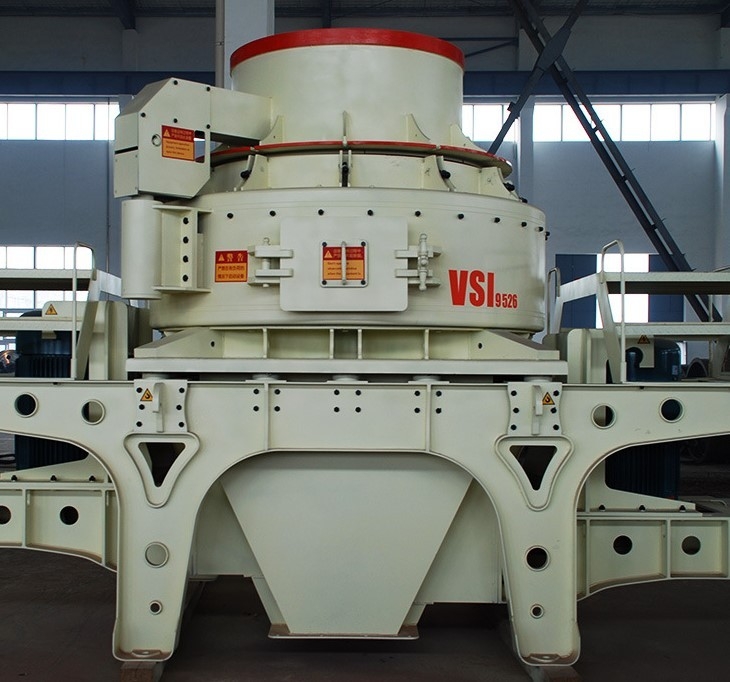
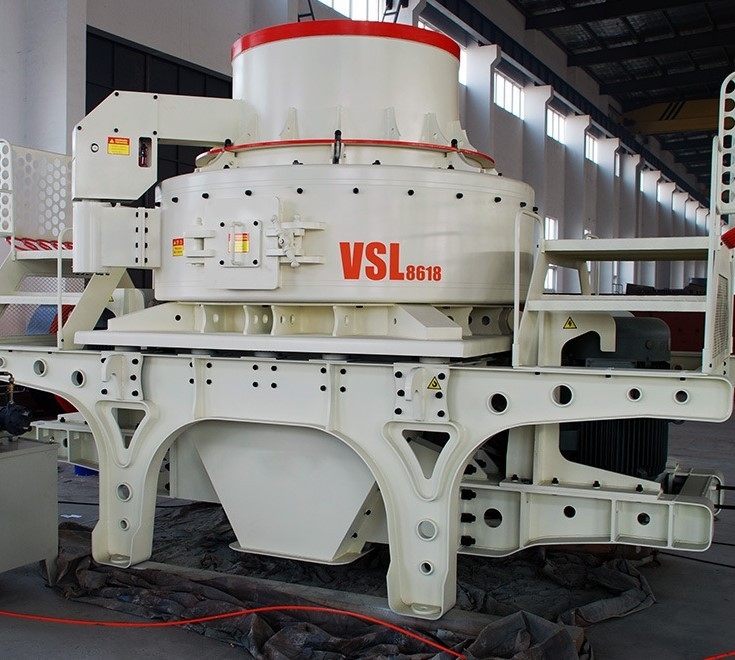
A VSI sand maker, also known as a vertical shaft impact crusher, uses a high-speed rotor to accelerate material and generate impact crushing.
The material enters from the top of the machine, is accelerated by the rotor, and is then thrown into the crushing chamber. Depending on the configuration, particles may collide with other particles or with wear-resistant anvils before being discharged.
VSL8618
VSL9526
VSL8618
VSI sand makers are commonly used for:
Manufactured sand production
Aggregate shaping
Fine crushing
Quarry processing
Concrete aggregate production
Road and railway aggregate preparation
Construction waste processing
Compared with conventional compression crushing, a VSI sand maker is often selected when particle shape, fine crushing, and manufactured sand quality are important.
VSI Sand Maker Types and Features
VSI sand makers can use different crushing chamber configurations depending on the material and product requirements.
Rock-on-Rock VSI
In a rock-on-rock configuration, accelerated particles mainly collide with other particles or with a material layer inside the crushing chamber.
Typical characteristics include:
Strong particle-to-particle crushing effect
Suitable for aggregate shaping
Reduced direct wear on some chamber components
Suitable for many hard and abrasive materials
Commonly used where product shape is important
Rock-on-Anvil VSI
In a rock-on-anvil configuration, accelerated material impacts wear-resistant anvils or impact surfaces inside the crushing chamber.
Typical characteristics include:
Strong impact crushing force
Suitable for fine crushing and sand making
Higher reduction potential in suitable applications
Requires appropriate wear-part selection
Suitable where stronger impact breakage is required
The final configuration should be selected according to material hardness, abrasiveness, feed size, required capacity, and final product specifications.
Materials and Applications
LIPU VSI sand makers can process a wide range of hard and medium-hard materials.
Typical materials and application areas for VSI sand making and aggregate shaping
Typical materials include:
Granite
Basalt
River pebble
Quartz
Limestone
Dolomite
Sandstone
Construction waste
Other suitable rock and mineral materials
Typical applications include:
Manufactured sand production
Aggregate shaping
Concrete aggregate processing
Quarry fine crushing
Road and railway aggregate production
Crushed sand production
Construction waste recycling
For hard rock crushing, a VSI sand maker is commonly installed after primary and secondary crushing.
For medium-hard materials, it can work together with a Jaw Crusher and Impact Crusher in a complete crushing and sand-making line.
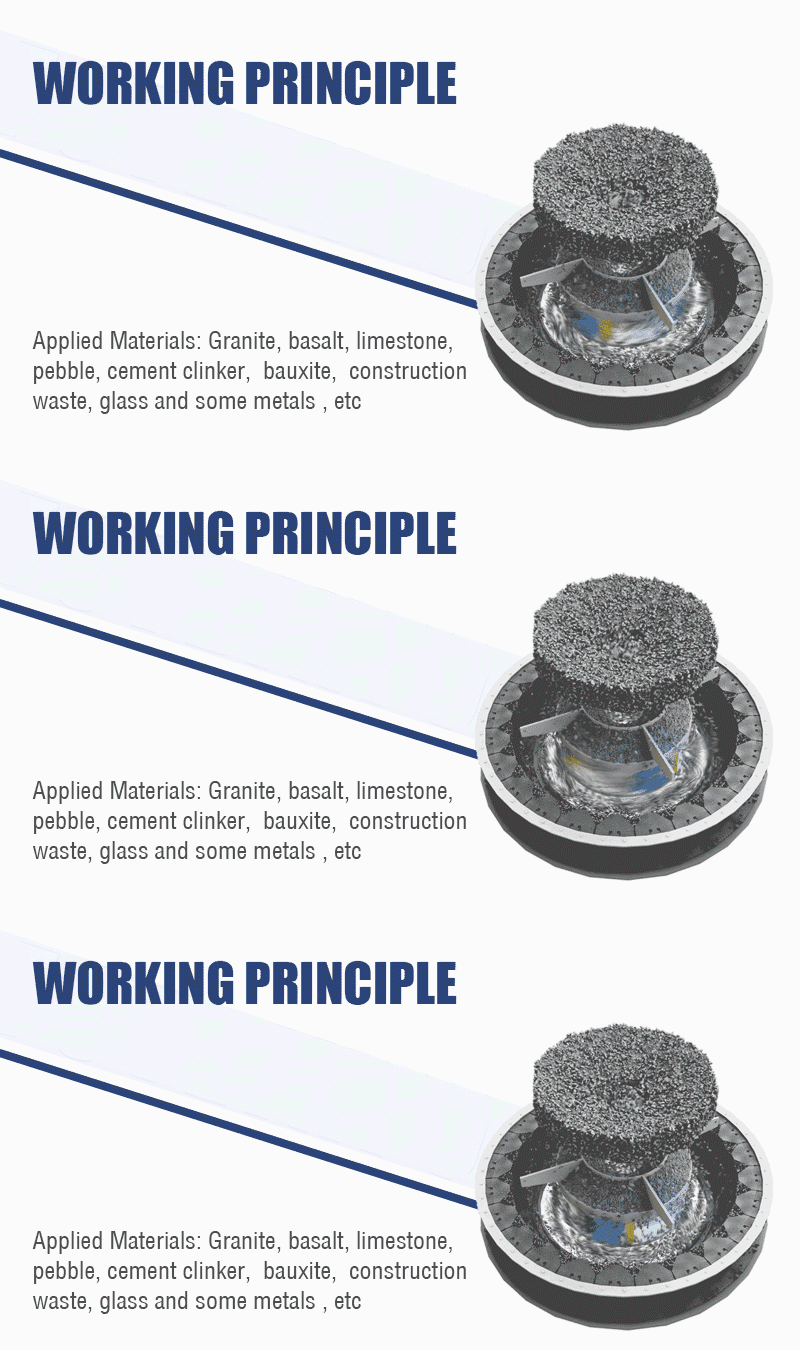
How Does a VSI Sand Maker Work?
Material enters through the upper feed opening and moves toward the high-speed rotor.
The rotor accelerates the material and throws it outward through the rotor ports.
Working principle of VSI sand making machine
The accelerated material then collides with:
Other particles
A material bed
Wear-resistant anvils
The surrounding crushing chamber
These repeated impacts reduce particle size and help improve particle shape.
The processed material then moves downward and leaves through the discharge opening.
VSI performance is influenced by:
Rotor speed
Feed size
Feed gradation
Material hardness
Material abrasiveness
Crushing chamber configuration
Rotor configuration
Feed rate
Main VSI Sand Maker Components
A typical VSI sand maker includes:
Main structural components of a VSI sand maker and its internal drive assembly
Feed hopper
Rotor
Rotor tips
Crushing chamber
Main shaft assembly
Housing
Transmission system
Drive motor
Lubrication system
Cooling system
Discharge section
Electrical control system
The rotor and wear parts are critical to crushing performance and operating cost.
Wear-part selection should therefore match the abrasiveness and hardness of the processed material.
When Is a VSI Sand Maker the Right Choice?
A VSI sand maker is especially suitable when the project requires fine crushing, manufactured sand, or improved aggregate particle shape.
It is commonly selected when:
Manufactured sand is required
Cubical aggregate shape is important
Secondary crushing has already been completed
Fine crushing is required before screening
Aggregate shaping is required
Needle-like and flaky particles need to be reduced
The plant uses a closed crushing and screening circuit
A VSI sand maker should not be selected only according to nominal capacity.
Material abrasiveness, feed size, wear cost, and downstream screening requirements should also be considered.
VSI Sand Maker vs Impact Crusher
VSI sand makers and horizontal shaft impact crushers both use impact force, but they are normally used in different crushing stages.
Item
VSI Sand Maker
Impact Crusher
Shaft Arrangement
Vertical shaft
Horizontal shaft
Typical Stage
Tertiary crushing / fine crushing / shaping
Secondary crushing
Feed Size
Smaller
Larger
Main Application
Sand making and aggregate shaping
Secondary crushing
Product Shape
Strong shaping capability
Good aggregate shape
Typical Materials
Hard and medium-hard materials
Mainly medium-hard materials
Main Wear Parts
Rotor tips and chamber wear parts
Blow bars and impact plates
An Impact Crusher is generally used for secondary crushing, while a VSI sand maker is more commonly installed later in the process for fine crushing, shaping, and manufactured sand production.
Sand Making Process
A VSI sand maker usually works as part of a complete crushing, screening, and sand-making line.
Typical VSI sand making process from feeding and crushing to screening, sand making, washing, and finished product
A Belt Conveyor is normally used to transfer material between the different crushing and screening stages.
Oversized material from the vibrating screen can be returned to the VSI sand maker or upstream crusher to form a closed crushing circuit.
VSI Sand Maker Technical Parameters
LIPU VSI sand makers are available in different models for sand shaping and sand-making applications.
VSI Sand Maker
Model
Sand Shaping
Sand Making
Sand Shaping
Sand Making
Motor Power(kw)
Max.Feeding Size (mm)
Throughput(t/h)
PCL 0815
<30
<35
70-140
130-230
2×75
PCL 0818
<30
<35
80-190
165-283
2×90
PCL 0922
<35
<40
105-145
220-330
2×110
PCL 0926
<35
<40
120-190
240-380
2×132
PCL 1032
<40
<45
181-278
246-356
2×160
PCL 1040
<40
<45
262-284
350-440
2×200
PCL 1250
<45
<50
345-371
414-540
2×250
PCL 1263
<50
<55
453-498
521-585
2×315
Actual capacity may vary according to material hardness, abrasiveness, feed gradation, rotor speed, crushing chamber configuration, and final product requirements.
The technical parameters should therefore be used for preliminary model selection.
How to Select the Right VSI Sand Maker
VSI sand maker selection should be based on the complete crushing and sand-making process rather than only on capacity.
For preliminary selection, please provide:
Material type
Maximum feed size
Required capacity
Required final product size
Material hardness
Material abrasiveness
Required sand percentage
Aggregate shaping requirement
Upstream crusher type
Screening configuration
Project location
Important selection factors include:
Feed Size
The maximum feed size should remain within the allowable range of the selected model.
Material Abrasiveness
Highly abrasive materials require suitable rotor tips and wear-part materials.
Sand Making or Shaping
Sand-making and shaping duties may use different feed sizes and operating conditions.
Required Capacity
Capacity should be evaluated together with feed gradation, rotor speed, and the complete closed-circuit system.
Final Product Requirements
The required sand grading and aggregate particle shape affect VSI configuration and downstream screening.
Complete Plant Configuration
The VSI sand maker should be matched with upstream crushing, screening, conveying, and optional sand washing equipment.
Why Choose LIPU?
LIPU Heavy Industry provides crushing, screening, grinding, classification, and mineral processing equipment for quarry, aggregate, and mining projects.
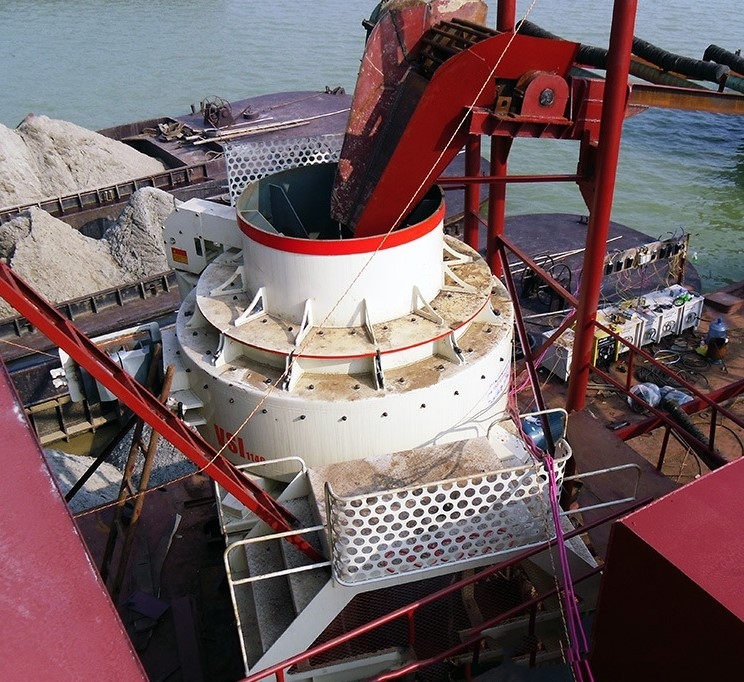
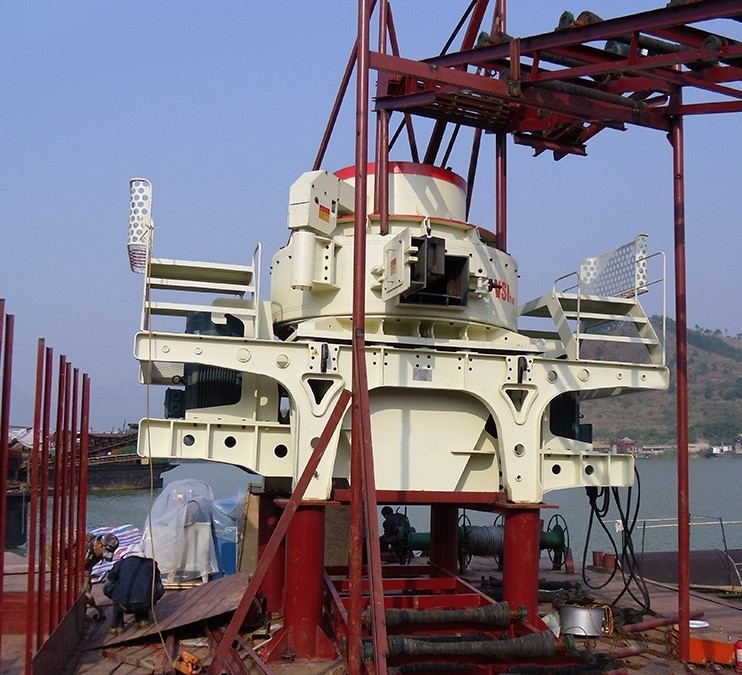
Ukrainian customer site
Sand making machine installation site
For VSI sand maker applications, LIPU can assist with:
VSI model selection
Sand-making process design
Crushing and screening equipment matching
Closed-circuit configuration
Wear-part selection
Equipment manufacturing
Factory inspection and testing
Installation and commissioning support
Spare parts supply
Technical service
For complete manufactured sand projects, the VSI sand maker can be selected as part of the full production line rather than as an isolated machine.
Frequently Asked Questions
What is a VSI sand maker mainly used for?
A VSI sand maker is mainly used for manufactured sand production, fine crushing, and aggregate shaping.
What materials can a VSI sand maker process?
It can process granite, basalt, river pebble, quartz, limestone, dolomite, construction waste, and other suitable hard or medium-hard materials.
What is the difference between a VSI sand maker and an impact crusher?
An impact crusher is mainly used for secondary crushing, while a VSI sand maker is more commonly used for tertiary crushing, manufactured sand production, and aggregate shaping.
Can a VSI sand maker process hard rock?
Yes. VSI sand makers can process hard rock, but material abrasiveness should be considered because it directly affects wear-part life and operating cost.
Can LIPU provide a complete manufactured sand production line?
Yes. LIPU can configure feeding, primary crushing, secondary crushing, VSI sand making, screening, conveying, and optional sand washing equipment according to project requirements.