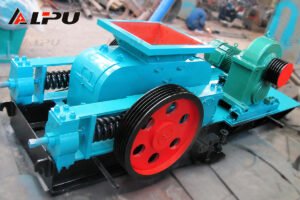
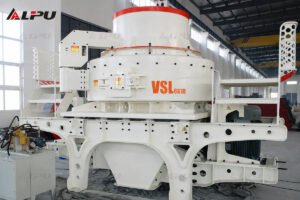
LIPU Simmons cone crushers are designed for secondary and tertiary crushing of medium-hard and hard rocks and ores in mining, quarrying, and aggregate production.
The CS series uses a mature spring cone crusher structure with compression crushing, mechanical transmission, spring overload protection, and adjustable crushing cavities. Coarse, medium-coarse, and fine cavity configurations can be selected according to feed size, required product size, capacity, and the overall crushing circuit.
A Simmons cone crusher is a compression-type cone crusher commonly used for medium and fine crushing after primary crushing.
Material enters the annular crushing chamber between the mantle and concave. The eccentric mechanism causes the moving cone to continuously approach and move away from the fixed crushing surface.
During this movement, material is repeatedly compressed, bent, and crushed until it becomes small enough to pass through the discharge opening.
Compared with newer hydraulic cone crusher designs, the Simmons cone crusher uses a traditional spring protection system and a mechanically mature crushing structure.
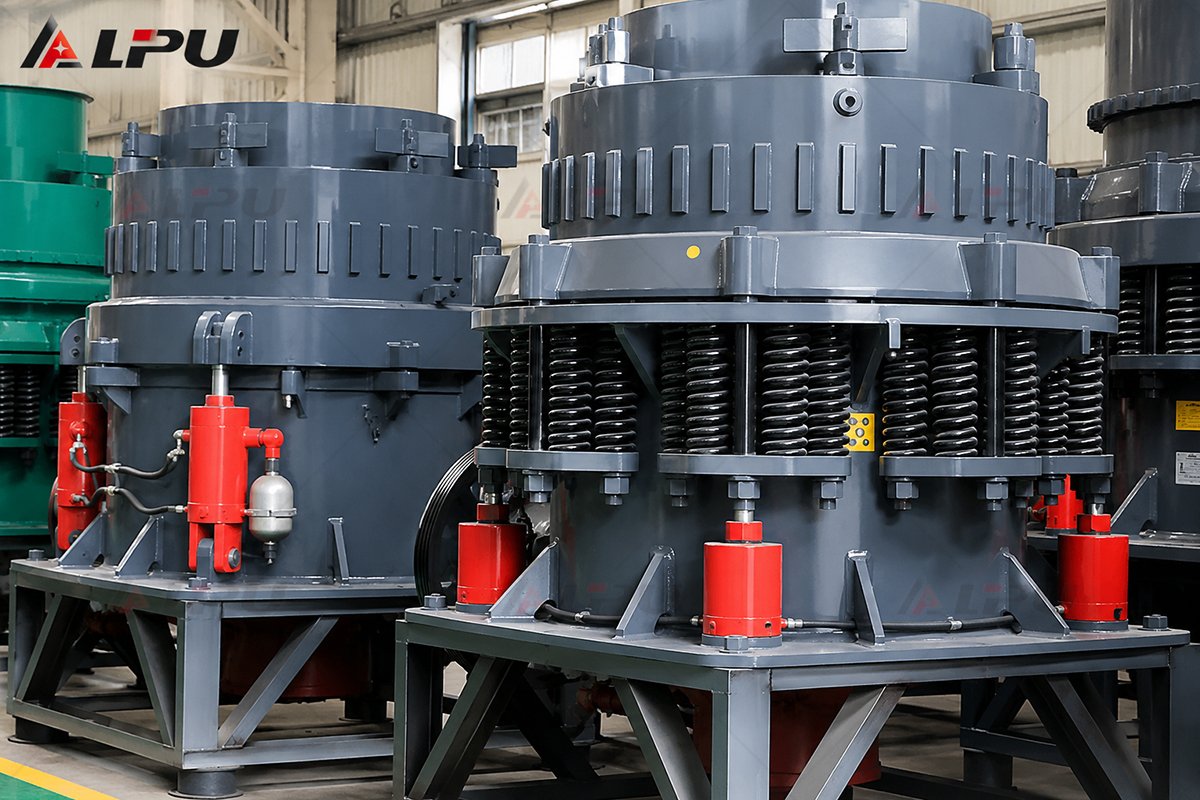
Simmons cone crusher in workshop assembly
Simmons cone crusher ready for shipment
It is widely used in:
Mining ore crushing
Quarry aggregate production
Hard-rock crushing
Secondary crushing
Tertiary crushing
Road and railway aggregate production
Closed-circuit crushing plants
Crushing Cavity Types and Features
LIPU CS series Simmons cone crushers are available with different cavity configurations to match different feed sizes and final product requirements.
The current series includes:
Coarse cavity
Medium-coarse cavity
Fine cavity
Coarse, medium-coarse and fine cavity configurations for Simmons cone crushers
Coarse Cavity
The coarse cavity is designed for larger feed sizes and is generally used for secondary crushing.
It is suitable for:
Larger feed material
Secondary crushing
Quarry applications
Hard-rock crushing
Mining ore reduction
For example, the CS1400C-D accepts feed sizes up to 235 mm.
Medium-Coarse Cavity
The medium-coarse cavity provides a balance between feed size and final product size.
It is suitable for:
Secondary crushing
Intermediate crushing
Closed-circuit aggregate production
Medium-sized feed material
CS1400Z-D and CS1400Z-X are medium-coarse cavity configurations with different stroke and discharge ranges.
Fine Cavity
The fine cavity is used where smaller product sizes are required.
It is suitable for:
Tertiary crushing
Fine aggregate production
Smaller upstream feed
Closed-circuit fine crushing
Fine cavity models include CS1400S-X and CS1200S-X.
The correct cavity should be selected according to feed size, discharge size, required capacity, material characteristics, and circulating load.
Materials and Applications
Simmons cone crushers are suitable for medium-hard and hard rocks and ores.
Suitable materials and application scenarios of Simmons cone crusher
Typical materials include:
Granite
Basalt
Quartzite
Gabbro
River pebble
Iron ore
Gold ore
Copper ore
Other suitable medium-hard and hard materials
Typical applications include:
Quarry aggregate production
Hard-rock crushing
Mining ore crushing
Road aggregate production
Railway aggregate production
Concrete aggregate production
Secondary crushing
Tertiary crushing
In a typical hard-rock plant, the Simmons cone crusher is installed after a Jaw Crusher for further size reduction.
How Does a Simmons Cone Crusher Work?
The motor transfers power through the drive system to the transmission shaft.
The transmission shaft drives the eccentric sleeve through the bevel gear system.
As the eccentric sleeve rotates, the moving cone performs a gyratory crushing motion.
Working principle of a Simmons cone crusher
During operation:
Material enters the crushing chamber from the top.
The moving cone approaches the concave.
Material is compressed between the mantle and concave.
As the moving cone moves away, crushed material travels downward.
Material reaching the required size exits through the discharge opening.
The crushing process is continuous as long as material is supplied steadily.
Crushing performance is affected by:
Feed size
Feed gradation
Cavity type
Stroke
Discharge setting
Material hardness
Material abrasiveness
Crusher loading
Closed-circuit return load
Main Cone Crusher Components
Main Cone Crusher Components of a Simmons cone crusher
A typical Simmons cone crusher includes:
Feed opening
Concave
Mantle
Moving cone
Main shaft
Eccentric sleeve
Adjusting sleeve
Support sleeve
Transmission shaft
Bevel gears
Main frame
Spring protection system
Lubrication system
Cavity clearing system
The mantle and concave are the main wear parts in direct contact with the crushed material.
Wear-part selection should therefore consider material hardness, abrasiveness, feed gradation, and operating conditions.
Spring Protection and Discharge Adjustment
The spring protection system is one of the main structural features of the Simmons cone crusher.
During normal crushing, the support sleeve is held in position by spring pressure.
If uncrushable material such as metal enters the crushing chamber, the spring system can compress and temporarily enlarge the discharge opening.
This allows the foreign material to pass through and helps protect the crusher from mechanical damage.
After the foreign material is discharged, the spring system returns the crusher to its normal operating position.
The discharge opening can be adjusted according to the required product size.
The crusher also uses a cavity clearing system to assist when material becomes trapped inside the crushing chamber.
Typical Crushing Process
A Simmons cone crusher normally operates as part of a complete crushing and screening plant.
The vibrating screen separates qualified material from oversized particles.
Oversized material can be returned to the crusher for additional crushing.
A Belt Conveyor is normally used to transfer material between the different crushing and screening stages.
Simmons Cone Crusher Technical Parameters
LIPU CS series Simmons cone crushers are available in coarse, medium-coarse, and fine cavity configurations.
Model
Cavity Type
Stroke (mm)
Max. Feeding Size (mm)
Discharge Opening (mm)
Capacity (t/h)
Motor Power (kW)
Weight (t)
CS1400C-D
Coarse
30
235
30–60
210–530
220
25
CS1400Z-D
Medium Coarse
30
215
25–50
200–500
220
25
CS1400Z-X
Medium Coarse
25
180
22–45
180–475
220
25
CS1400S-X
Fine
25
100
19–40
130–260
220
25
CS1200C-D
Coarse
22
180
19–50
110–250
132
16
CS1200S-X
Fine
15
80
16–40
80–180
132
16
Actual capacity may vary according to material hardness, feed gradation, abrasiveness, moisture, cavity configuration, discharge setting, and operating conditions.
Technical parameters should therefore be used for preliminary model selection.
How to Select the Right Simmons Cone Crusher
Simmons cone crusher selection should be based on the complete crushing circuit rather than only nominal capacity.
For preliminary model selection, provide:
Material type
Maximum feed size
Required capacity
Required final product size
Material hardness
Material abrasiveness
Upstream crusher model
Screening configuration
Number of finished product sizes
Project location
Important selection factors include:
Feed Size
The cavity must accept the maximum particle size discharged from the upstream crusher.
Required Product Size
Coarse cavities are generally used for larger feed and secondary crushing, while fine cavities are more suitable for tertiary crushing.
Required Capacity
Capacity varies according to model, cavity type, stroke, discharge setting, and feed conditions.
Material Abrasiveness
Highly abrasive materials increase mantle and concave wear and should be considered when estimating operating cost.
Closed-Circuit Load
Returned oversized material from the vibrating screen increases the actual crusher throughput requirement.
LIPU Heavy Industry provides crushing, screening, grinding, and mineral processing equipment for mining, quarrying, and aggregate projects.
Simons cone crusher on-site operation
Simons cone crusher at a quarry site
Simmons cone crusher aggregate plant site
For Simmons cone crusher applications, LIPU can assist with:
Crusher model selection
Crushing cavity selection
Crushing circuit design
Jaw crusher and cone crusher matching
Screening equipment matching
Closed-circuit configuration
Equipment manufacturing
Factory inspection and testing
Installation and commissioning support
Mantle and concave supply
Lubrication system support
Spare parts supply
For complete crushing plants, the cone crusher can be selected together with feeding, primary crushing, screening, and conveying equipment according to actual project conditions.
Frequently Asked Questions
What is a Simmons cone crusher used for?
A Simmons cone crusher is mainly used for secondary and tertiary crushing of medium-hard and hard rocks and ores in mining, quarrying, and aggregate production.
What is the difference between coarse and fine cavities?
Coarse cavities accept larger feed sizes and are mainly used for secondary crushing. Fine cavities accept smaller feed and are used when a finer final product is required.
What materials can a Simmons cone crusher process?
Typical materials include granite, basalt, quartzite, gabbro, river pebble, iron ore, gold ore, copper ore, and other medium-hard to hard materials.
How does the spring protection system work?
When uncrushable material enters the chamber, the spring system can compress and temporarily enlarge the discharge opening, allowing the foreign material to pass through.
Can LIPU provide a complete crushing plant?
Yes. LIPU can configure feeding, jaw crushing, cone crushing, screening, conveying, and closed-circuit return systems according to project requirements.