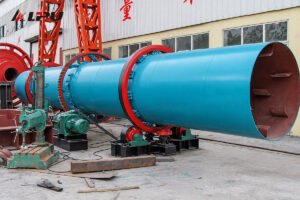
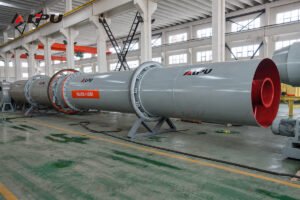
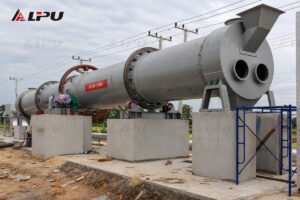
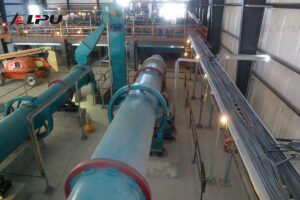
LIPU Semi-Coke Dryer Machine reduces moisture in semi-coke through rotary drying. Heat sources and system configuration can be selected to suit the material and project requirements.
Capacity: 4–103 t/h, depending on model and operating conditions.
A semi-coke dryer is an industrial drying system used to reduce excess moisture in semi-coke before storage, transport, or further processing. The rotary drum continuously lifts and tumbles the material while it moves through the drying zone.
Semi-Coke Dryer
Semi-Coke Dryer
Drying performance depends on the semi-coke’s particle size, initial moisture, required final moisture, feed rate, heat source, and operating conditions. The dryer should therefore be selected based on material testing and process requirements rather than capacity alone.
How Does a Semi-Coke Rotary Dryer Work?
Semi-coke is fed into the rotary drum at a controlled rate. As the drum rotates, internal lifting flights raise and release the material, exposing it to the drying gas and promoting heat and mass transfer. The dried material then leaves through the discharge end, while exhaust gas is routed to dust-collection or treatment equipment as required by the project.
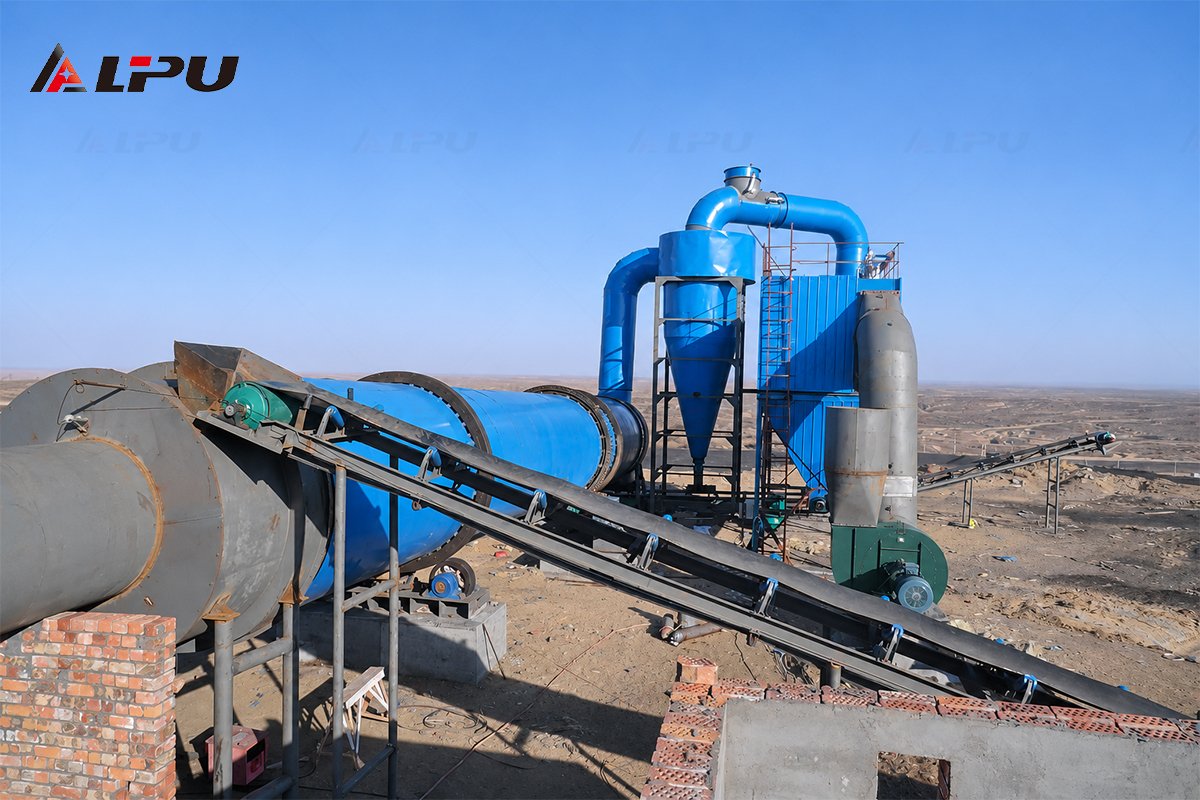
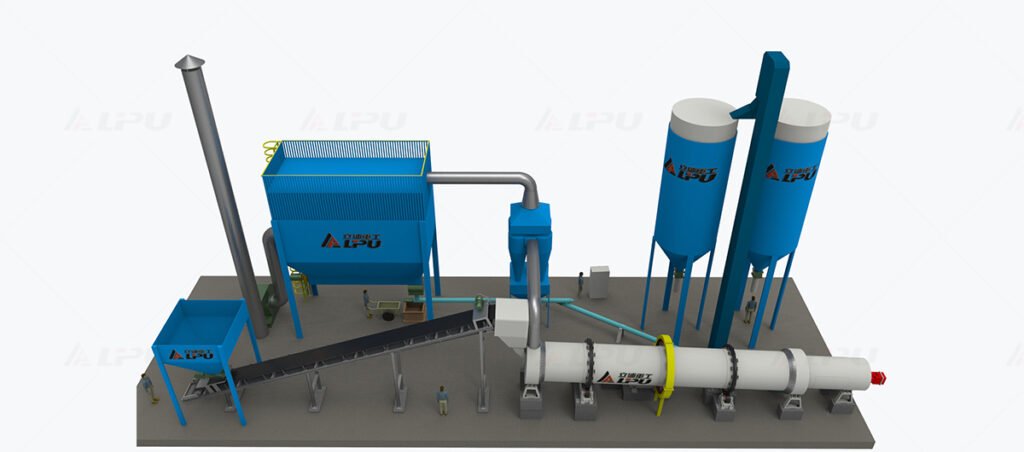
Typical semi-coke drying line; equipment layout and configuration vary by project
A typical process includes:
Feed preparation: Confirm the feed size, moisture, and consistency required for the selected dryer.
Controlled feeding: Deliver semi-coke evenly into the drum to support stable operation.
Rotary drying: The rotating drum and lifting flights move and disperse the material through the drying zone.
Product discharge: Dried semi-coke exits the drum for conveying, cooling, storage, or the next process.
Exhaust handling: Exhaust gas and entrained dust are managed using equipment selected for the material and site requirements.
The illustration on this page shows a typical arrangement. Actual gas-flow direction, heat source, and auxiliary equipment depend on the final system design.
Semi-Coke Dryer System Configuration
A complete semi-coke drying line may include a feed hopper, metering conveyor, rotary dryer, heat-source system, product conveyor, and exhaust-treatment equipment. The required arrangement depends on throughput, material properties, fuel availability, emission requirements, and the plant layout.
Dust-collection equipment, such as a cyclone or bag filter, should be selected according to the project’s dust characteristics and environmental requirements. Not every installation uses the same equipment combination.
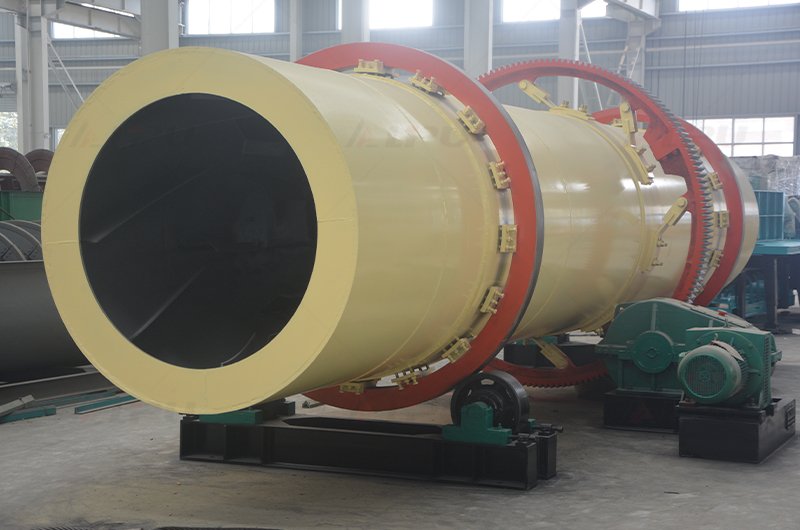
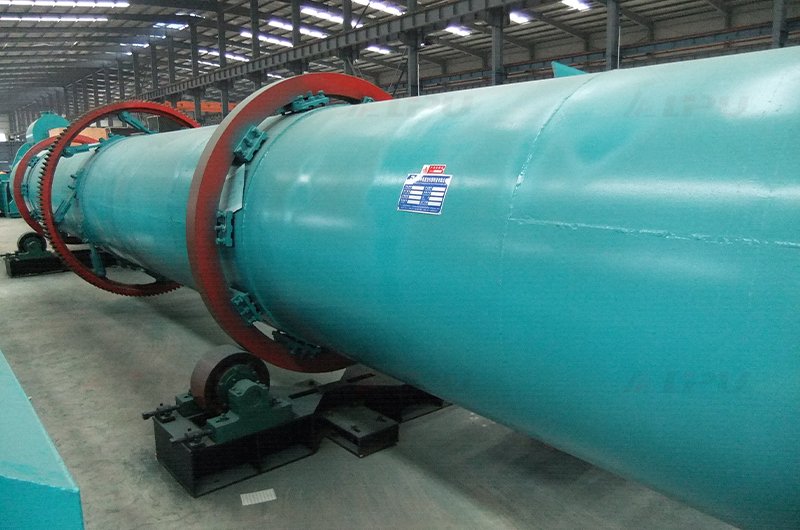
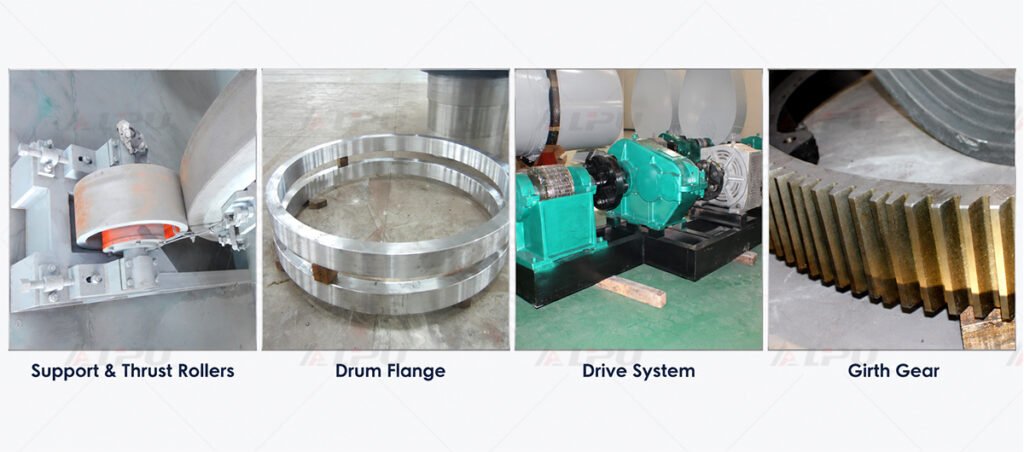
Key rotary dryer components include the support rollers, drum flange, drive system, and girth gear
Main Benefits of a Semi-Coke Rotary Dryer
Continuous processing: Rotary operation supports steady material movement through the drying zone.
Configurable capacity: Multiple drum sizes and drive configurations can be considered to match the required throughput.
Adaptable heat-source selection: The system can be designed around available and suitable heat sources.
Integrated process design: Feeding, drying, conveying, and exhaust handling can be coordinated as one production line.
Project-specific configuration: Drum dimensions, auxiliary equipment, and controls can be selected according to material and site conditions.
Service access: Drive, support, and other key components can be arranged to support inspection and maintenance.
Actual performance depends on the feed material, initial and target moisture, heat source, operating conditions, and selected system configuration.
Semi-Coke Dryer Applications
Semi-coke dryers are used to reduce moisture in semi-coke before downstream handling or processing. Depending on material compatibility and project design, rotary dryers may also be considered for other granular or lumpy materials.
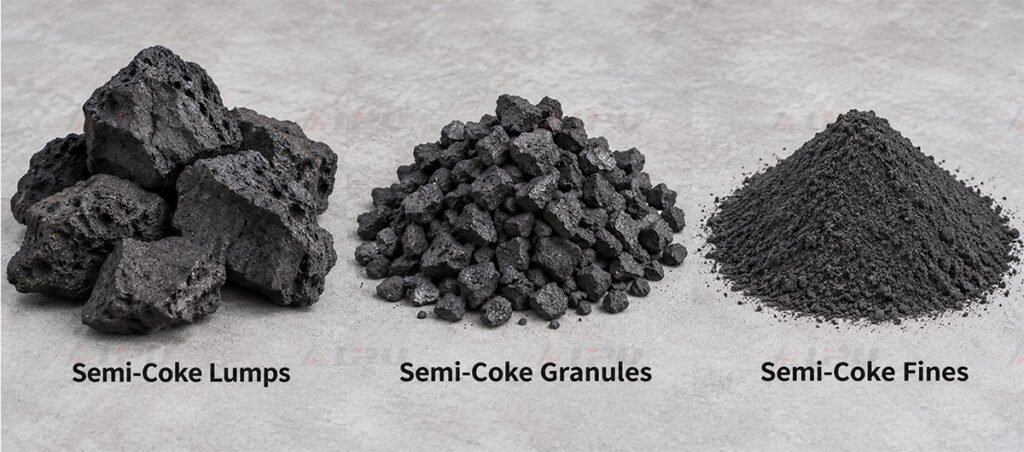
Semi-coke feed may include lumps, granules, or fines; confirm material size and handling requirements when selecting a dryer
Before selecting a dryer, evaluate:
Feed particle-size range and distribution
Initial and target moisture content
Required processing capacity
Material temperature limits and handling characteristics
Available heat source and site utilities
Dust-control and environmental requirements
Material testing is recommended when the feed properties vary or the target moisture is critical.
Semi-Coke Dryer Models and Technical Specifications
The table below lists the model data shown for the rotary dryer. Confirm the applicable model and operating basis with LIPU before ordering, as throughput and performance depend on the material and process conditions.
Rotary dryer
Model
Volume of the drum(m³)
Capacity(t/h)
Installation slope(%)
Maximum intake temperature (℃)
Main motor power(kw)
Weight(t)
Φ0.6×8
2.2
0.4-0.6
3-5
700-850
3
3.2
Φ0.8×10
5
1.3-1.8
3-5
700-850
4
4.4
Φ1.0×10
7.8
2.0-3.0
3-5
700-850
5.5
5.3
Φ1.2×10
11.3
3.0-4.0
3-5
700-850
7.5
8.1
Φ1.2×1.2
13.5
3.5-5.0
3-5
700-850
11
9.1
Φ1.5×12
21.2
5.5-7.5
3-5
700-850
15
14.6
Φ1.5×15
26.5
7.0-10
3-5
700-850
15
16.5
Φ1.8×12
30.5
8.0-11
3-5
700-850
18.5
21.9
Φ1.8×18
45.8
12-16
3-5
700-850
18.5
26.6
Φ2.0×20
62.8
16-23
3-5
700-850
22
36.5
Φ2.2×22
83.6
22-30
3-5
700-850
30
43.9
Φ2.4×22
99.5
26-35
3-5
700-850
45
53.1
Φ2.5×25
122.7
32-45
3-5
700-850
45
62.6
Φ2.6×24
127.4
33-46
3-5
700-850
45
63.0
Φ2.8×28
172.4
44-62
3-5
700-850
45
85.0
Φ3.0×25
176.6
45-64
3-5
700-850
75
89.0
Φ3.2×25
201
50-72
3-5
700-850
90
95.0
Φ3.4×28
254
65-92
3-5
700-850
110
122.0
Φ3.6×28
285
73-103
3-5
700-850
160
129.0
Information Needed for Dryer Selection
To help identify a suitable model and system configuration, provide:
Semi-coke feed size and size distribution
Initial moisture and required final moisture
Required throughput in tonnes per hour
Available heat source, fuel, and utilities
Dust-control or emission requirements
Plant layout, installation space, and conveying distance
Whether cooling, screening, or other downstream equipment is required
LIPU can review these details and discuss a configuration for the specific application.
Semi-Coke Dryer FAQs
What information is needed to select a semi-coke dryer? Provide the feed size, initial and target moisture, required throughput, available heat source, and site conditions. These details help determine the dryer size and supporting equipment.
Can the dryer use different heat sources? Heat-source options depend on the project design, fuel availability, local requirements, and material characteristics. Confirm the suitable option with LIPU.
Does the stated capacity apply to every material? No. Actual throughput depends on the material, moisture change required, heat source, and operating conditions. Confirm the capacity basis for the selected model.
Is dust-collection equipment included? Dust-collection equipment is selected according to the material and project requirements. A cyclone, bag filter, or other treatment equipment may be considered where appropriate.
Can the drying line be customized? The feeding, dryer, conveying, heat-source, and exhaust systems can be discussed according to the material, capacity, available utilities, and site layout.