LIPU configures silver ore processing plants for complex silver-bearing ores.The route is selected around mineralogy, testwork, capacity, and product requirements.
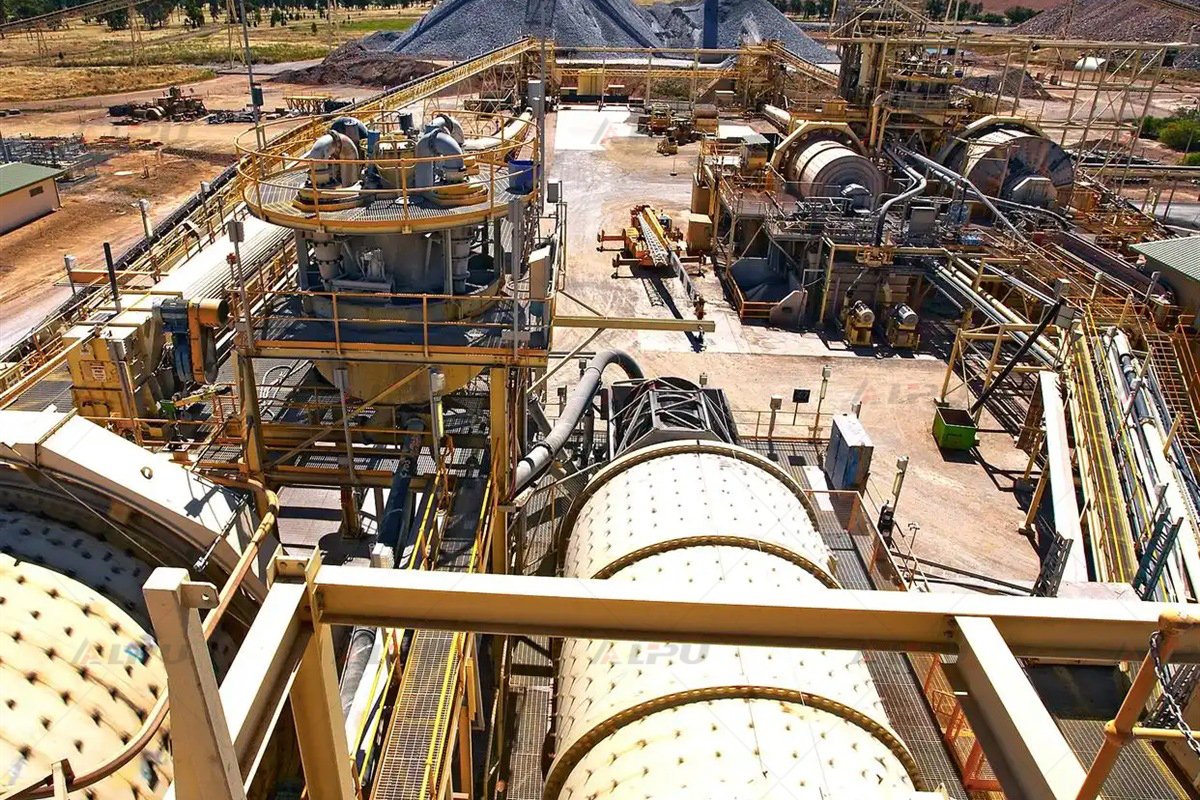
Silver ore processing plant configured around ore characteristics and selected recovery routes
How Silver Occurs in Ore
Silver rarely occurs as a simple standalone mineral. It may occur as native silver, silver sulfides, sulfosalts, silver-bearing galena, copper sulfides, or gold-silver minerals. Its recovery route depends on how silver is associated with valuable minerals and gangue.
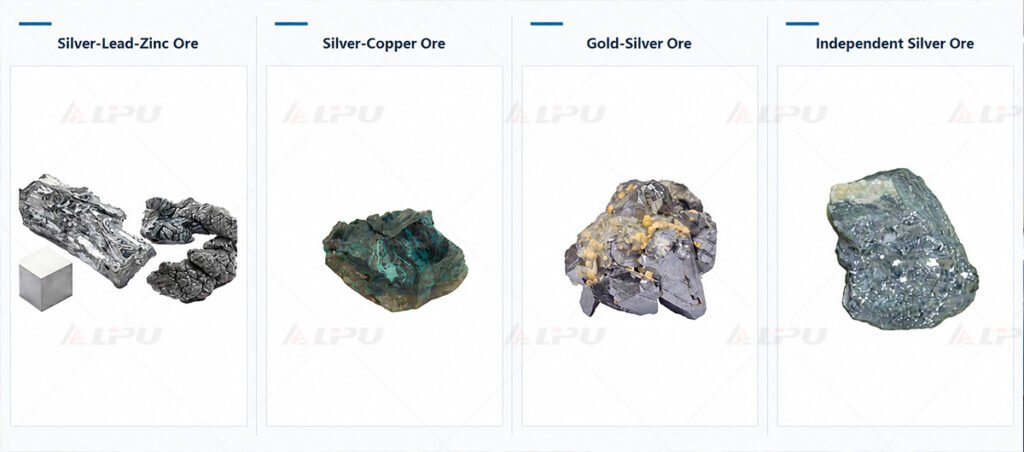
Common silver-bearing ore types considered during process selection
The key project inputs include:
Silver grade and distribution
Association with lead, zinc, copper, gold, or sulfide minerals
Mineral liberation size
Oxidation level and clay content
Flotation response and concentrate quality requirements
Target capacity, water availability, and tailings strategy
Mineralogy and flotation testwork should guide the circuit design. A plant should not be selected from silver grade alone.
Silver Ore Processing Routes
Silver-Lead-Zinc Ore
For silver associated with galena and zinc sulfides, differential flotation is commonly considered. The circuit may produce a silver-lead concentrate first, followed by zinc recovery where appropriate.
The sequence, reagent scheme, regrinding requirement, and concentrate grades are confirmed through testwork.
Silver-Copper Ore
Where silver reports with copper sulfides, flotation may recover a copper-silver concentrate. Depending on mineralogy, subsequent separation or selective cleaning may be required to meet downstream smelter requirements. The flotation principles and equipment selection can be reviewed with LIPU’s flotation machine range.
Gold-Silver Ore
Gold and silver may be recovered together through gravity concentration, flotation, cyanidation, or a combined route. The selected arrangement depends on whether the values are free-milling, associated with sulfides, or contained in a flotation concentrate.
For sulfide-associated gold and silver minerals, a gold flotation plant may be evaluated. Where cyanide leaching is appropriate after metallurgical testing, the project can also be assessed against gold CIL processing or gold CIP processing routes.
Independent Silver Ore
For silver minerals with suitable flotation response, crushing, grinding, classification, and flotation can produce a silver-rich concentrate. Gravity recovery may be added where coarse, liberated silver minerals are present.
Flotation Concentrate Followed by Leaching
Some projects first produce a concentrate through flotation and then evaluate downstream treatment. Direct leaching is not suitable for every silver mineral. Cyanide consumption, silver extraction, mineralogy, impurity levels, and environmental requirements must be assessed through metallurgical testing.
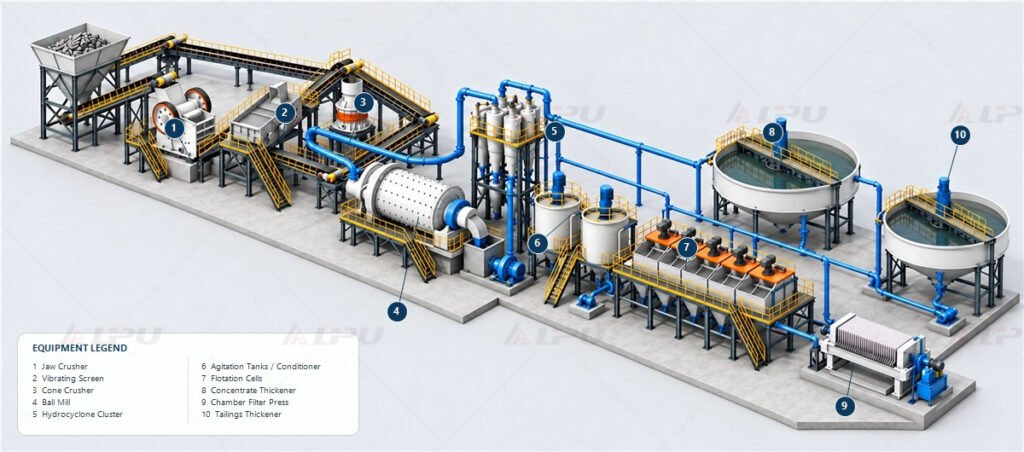
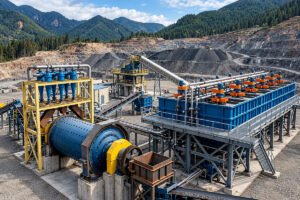
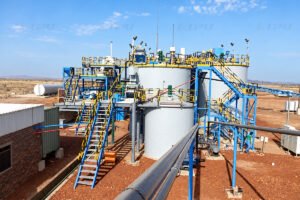
Layout and Key Equipment Identification for a Compact Silver Flotation Plant
Tailings from flotation are directed to the selected tailings thickening, filtration, storage, or water-recovery arrangement.
The actual flowsheet can include separate lead, zinc, copper, or pyrite flotation stages; regrinding; gravity recovery; or concentrate treatment, depending on the ore.
Crushing, Grinding, and Classification
Run-of-mine ore is reduced to a suitable flotation feed size through staged crushing and screening. Grinding is then controlled to liberate silver-bearing minerals while limiting unnecessary slimes generation and overgrinding.
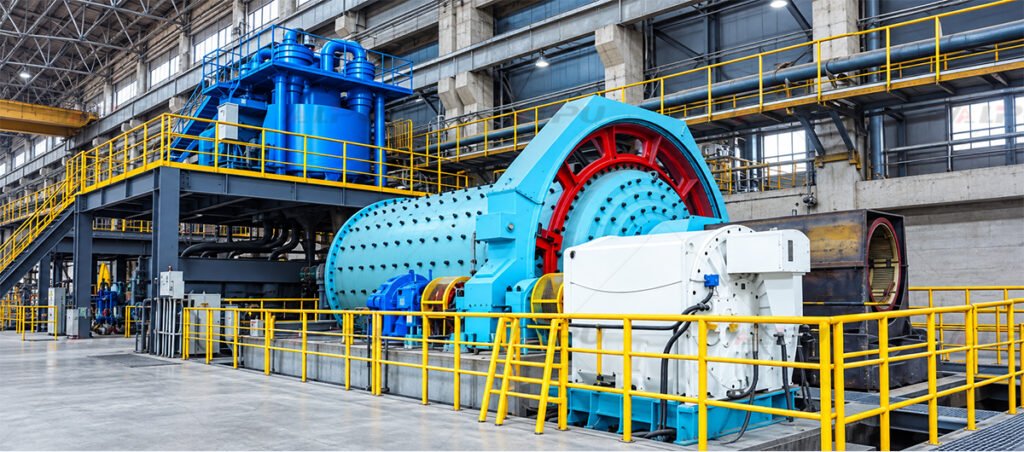
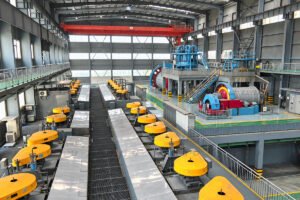
Grinding and classification prepare silver-bearing minerals for flotation
A typical grinding section may include a ball mill, hydrocyclones or classifiers, slurry pumps, and distribution equipment. The target grind size is established through testwork. Finer grinding is not automatically better; excessive grinding can affect flotation selectivity, reagent consumption, and concentrate filtration.
Silver Flotation Circuit Configuration
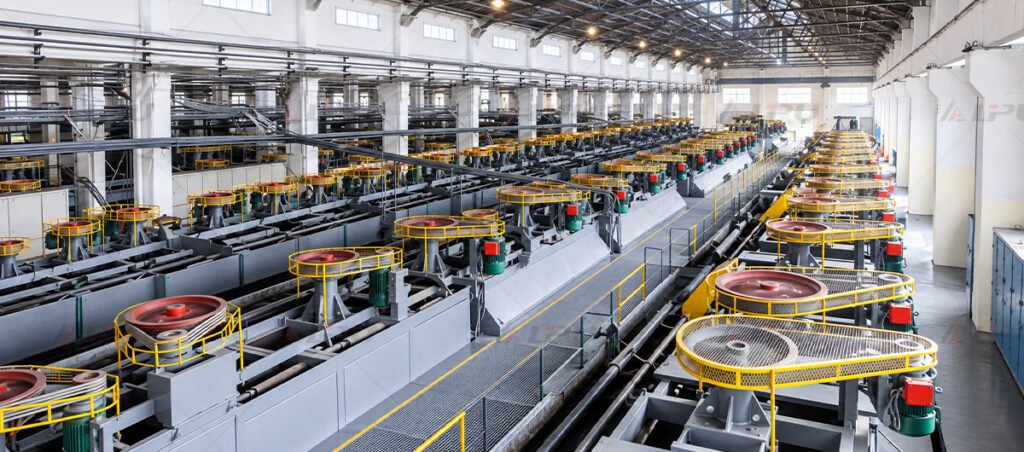
Conditioned slurry enters the selected flotation circuit. Depending on the ore, this may include roughing, scavenging, cleaning, and regrinding stages. Flotation machines are selected around ore response, pulp conditions, circuit duty, capacity, and process design.
Rougher flotation targets initial recovery of silver-bearing minerals. Scavenging treats rougher tailings to recover remaining valuable minerals. Cleaning upgrades the rougher concentrate to improve grade and reduce gangue or penalty elements.
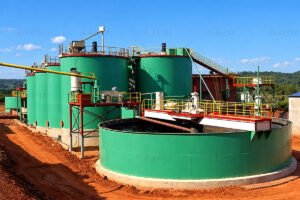
Flotation cells recover silver-bearing mineral concentrates
For complex ores, the circuit may include:
Differential lead-zinc flotation
Copper-silver flotation
Pyrite separation or depression
Regrinding of rougher concentrate before cleaning
Cleaner tailings recycle
Scavenger concentrate recycle
Multi-stage concentrate cleaning
These stages should be determined by flotation testwork and concentrate specifications, rather than copied from a standard layout.
Silver Concentrate Dewatering and Handling
Flotation concentrate is thickened before filtration and transport. The dewatering system is selected around concentrate tonnage, moisture requirements, downstream handling, water-recovery objectives, and site conditions.
A typical concentrate-handling section may include:
Concentrate thickener
Filter press, ceramic filter, or vacuum filter
Filtrate collection and return
Concentrate storage or loading arrangement
Process-water recovery system
Final silver concentrate quality and moisture should meet the requirements of the selected downstream buyer, smelter, or further-treatment route.
Tailings and Process Water Management
Flotation tailings are managed according to the project’s tailings-storage, water-recovery, and environmental requirements. Depending on the selected plant arrangement, tailings handling may include thickening, filtration, dry stacking, conventional storage, and process-water return.
LIPU can integrate tailings equipment into the overall silver processing plant layout, helping connect the recovery circuit with downstream slurry handling and water reuse.
Main Equipment for a Silver Ore Processing Plant
Process Stage
Typical Equipment
Purpose
Ore feed
Feeder, hopper, conveyor
Controlled ore delivery
Crushing
Jaw crusher, cone crusher, screen
Size reduction and screening
Grinding
Ball mill, hydrocyclone, classifier
Mineral liberation and classification
Flotation
Conditioning tank, flotation cells, reagent system
Recovery and upgrading of silver-bearing minerals
Concentrate dewatering
Thickener, filter press, ceramic filter
Concentrate thickening and filtration
Tailings handling
Thickener, pumps, filter system
Tailings treatment and water recovery
Control and utilities
Electrical control, instrumentation, pumps
Plant operation and slurry distribution
From Testwork to Plant Configuration
A practical silver ore processing proposal starts with ore information and metallurgical testwork. LIPU reviews the available data to help define a route suited to the project.
Useful inputs include:
Ore samples or testwork reports
Silver grade and multi-element assay
Mineralogy and liberation data
Target processing capacity
Required concentrate products and quality
Site layout, water, power, and logistics conditions
Tailings handling requirements
Based on these inputs, the proposal can define the process route, equipment list, plant layout, utility requirements, and downstream handling arrangement.
Why Work With LIPU?
LIPU provides mineral processing equipment and plant configuration support for projects requiring crushing, grinding, flotation, dewatering, and tailings equipment.
Our approach focuses on:
Ore-specific process selection
Equipment matched to the selected flowsheet
Practical plant layout and material flow
Integration of flotation, dewatering, and tailings handling
Support for new plants, expansions, and equipment upgrades
Frequently Asked Questions
What is the most common method for silver ore processing?
Flotation is commonly used when silver is associated with lead, zinc, copper, gold, or sulfide minerals. The final route depends on mineralogy, liberation, and flotation testwork.
Can silver be recovered with lead and zinc?
Yes. Silver often reports with lead and zinc sulfides. A differential flotation circuit may be used to produce silver-lead and zinc concentrates, subject to testwork results.
Is cyanidation suitable for all silver ores?
No. Leaching response varies significantly among silver minerals. Cyanidation should be considered only after metallurgical testing confirms extraction, reagent consumption, impurity behavior, and environmental suitability.
What equipment is needed for a silver flotation plant?
Typical equipment includes crushers, screens, grinding mills, classifiers, conditioning tanks, flotation cells, thickeners, filters, pumps, conveyors, and electrical control systems.
How is silver concentrate handled after flotation?
Silver-bearing concentrate is usually thickened and filtered before storage, transport, smelting, or further treatment. The required moisture and concentrate quality depend on the downstream route.
Can LIPU configure a complete silver ore processing plant?
Yes. LIPU can support equipment selection and plant configuration for crushing, grinding, flotation, concentrate dewatering, and tailings handling based on available ore and project data.